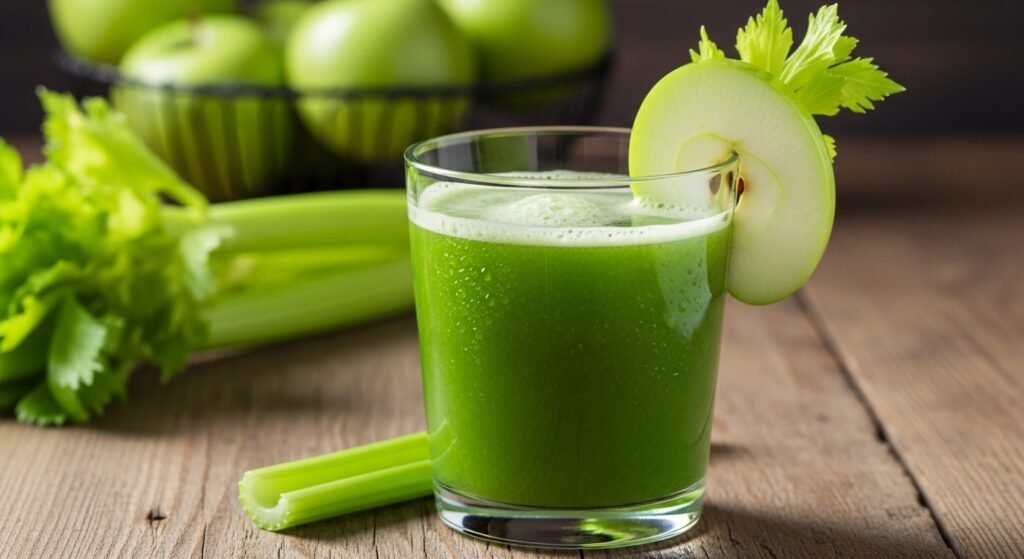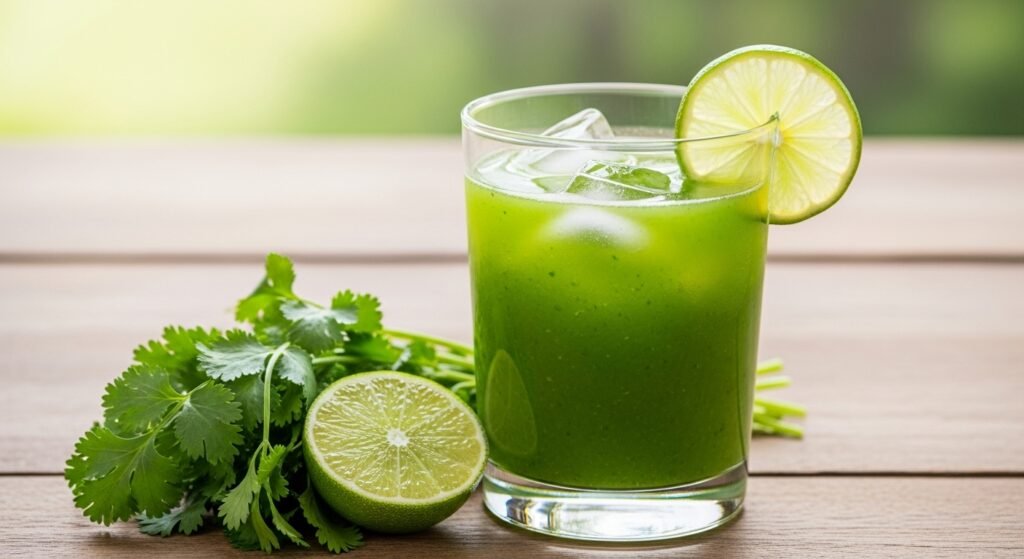
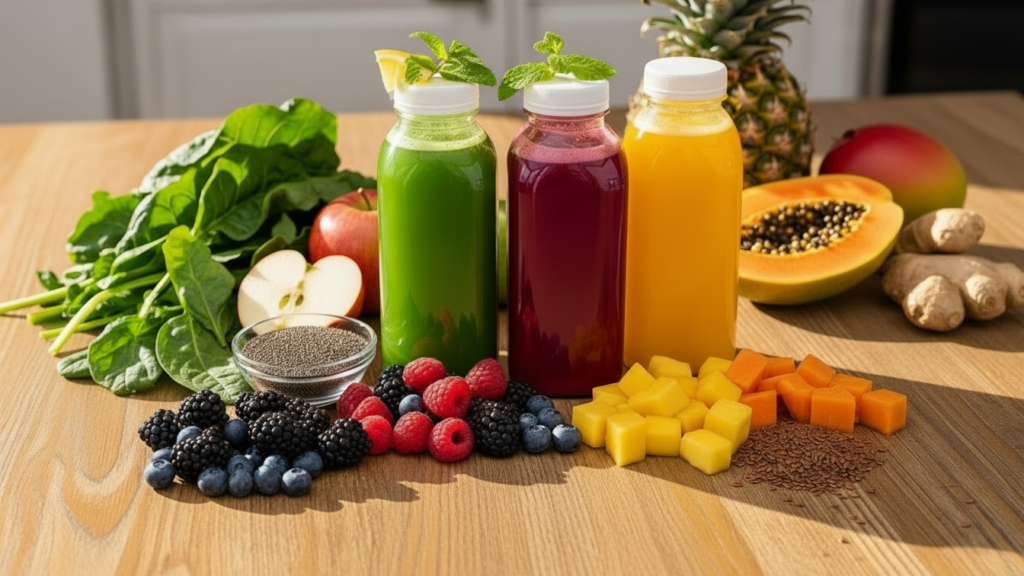
As we progress through 2026, the global conversation about wellness has moved from surface-level aesthetics to the gut microbiome and the search for an effective juice recipe for gut health, which is the foundational basis of human health. The Year of the Gut is officially here, sparking a massive interest in DIY juice recipes for gut health.
In the past, people focused on restrictive habits like counting calories or taking basic protein supplements. Today, people who care about their health are focusing on “biocentric” nutrition—leveraging nutrient-dense juice recipe for gut health to feed the trillions of microbes that live in the digestive tract.
The link between our digestion, our microbiome, and our fiber intake is no longer just a niche health topic; it is the foundation of modern preventive wellness, often supported by targeted juice recipe for gut health.
We now know that a healthy gut affects everything from how clear your mind is and how healthy your skin looks to how strong your immune system is and how fast your metabolism functions.
However, even though awareness is at an all-time high, common digestive problems like bloating, constipation, and sluggishness are also peaking because of high-stress lifestyles and processed diets.
By incorporating specific juice recipe for gut health, individuals can provide their digestive tract with bioavailable nutrients that promote healing. Ultimately, finding the right juice recipe for gut health can be a simple yet transformative step toward restoring balance to your internal ecosystem.
One of the best, science-backed ways to help this internal ecosystem is to use juice for gut health strategically. Gut juicing in 2026 is different from the sugary “cleanses” of the past; it focuses on juicing recipes for gut health that prioritize nutrient density and low-glycemic profiles.
In this complete guide, we’ll look at the best drinks for digestive health and specific juicing recipe for gut health that are high in fiber, meant to help you foster a strong, healthy microbiome.
By incorporating these specialized juicing recipes for gut health into your daily routine, you can support long-term digestive wellness and improved nutrient absorption.
Understanding Gut Health & Fiber With Juice Recipes for Gut Health
Before we get into the recipes, it’s important to know what “gut health” means in today’s scientific context and why fiber is the most important thing for it.
What Gut Health Really Means
Gut health is the balance and function of the gastrointestinal (GI) tract. Incorporating a specific juice recipe for gut health can be a helpful way to support this system, as a “healthy” gut is characterized by a high diversity of beneficial bacteria, a robust mucosal lining, and good motility.
When this system is out of balance, a condition called dysbiosis, it can cause systemic inflammation; however, finding the right juice recipe for gut health may assist in delivering the essential nutrients needed to restore balance and resolve digestive problems.
The Role of Fiber in Digestion
Fiber is the part of plant foods that your body cannot digest. Even though your body can’t absorb it, fiber is the main food supply for the bacteria in your stomach, which is why finding a high-fiber juice recipe for gut health can be so beneficial.
If you don’t get enough fiber, these microbes can start to “starve” and may even “eat” the mucus lining of your gut; however, incorporating the right juice recipe for gut health can help prevent the increased sensitivity, food intolerances, and inflammation that often follow.
Soluble vs. Insoluble Fiber
To get the most out of your healthy gut drinks 2026, you need to know the difference between the two types of fiber:
- Soluble Fiber: Dissolves in water to make a gel-like substance. It slows down digestion, feeds good bacteria (serving as a prebiotic), and helps keep blood sugar levels stable.
- Insoluble Fiber: Does not dissolve in water. It makes the stool bigger and acts like a “broom,” brushing through the intestines to keep things moving and prevent toxic buildup.
Prebiotics vs. Probiotics
While probiotics are the live beneficial bacteria found in fermented foods, prebiotics are the precise forms of fiber that nourish them. Think of probiotics as the “seeds” and prebiotics as the “fertilizer.”
Most of the juices we’ll talk about are high in prebiotics, which are the nutrients that your gut flora needs to thrive and multiply. Incorporating a specific juice recipe for gut health into your routine ensures you are getting these essential fibers.
By choosing the right juice recipe for gut health, you can support a balanced microbiome and improved digestion.
Juices as a Support, Not a Replacement
It’s a common myth that you should replace whole fruits and vegetables with juice. In 2026, the best way to use juice is as a “nutrient booster.” You can create a juice recipe for gut health that goes well with a high-fiber, whole-food diet instead of replacing it.
By using certain methods, such as keeping the pulp or blending, you can maintain the fiber while reaping the benefits of concentrated vitamins.
Ultimately, finding the right juice recipe for gut health allows you to support your digestion while still prioritizing the essential roughage your body needs.
The 10 Best Juices for Gut Health and Fiber in 2026
1. The Green Prebiotic Powerhouse (Spinach, Green Apple, & Ginger)
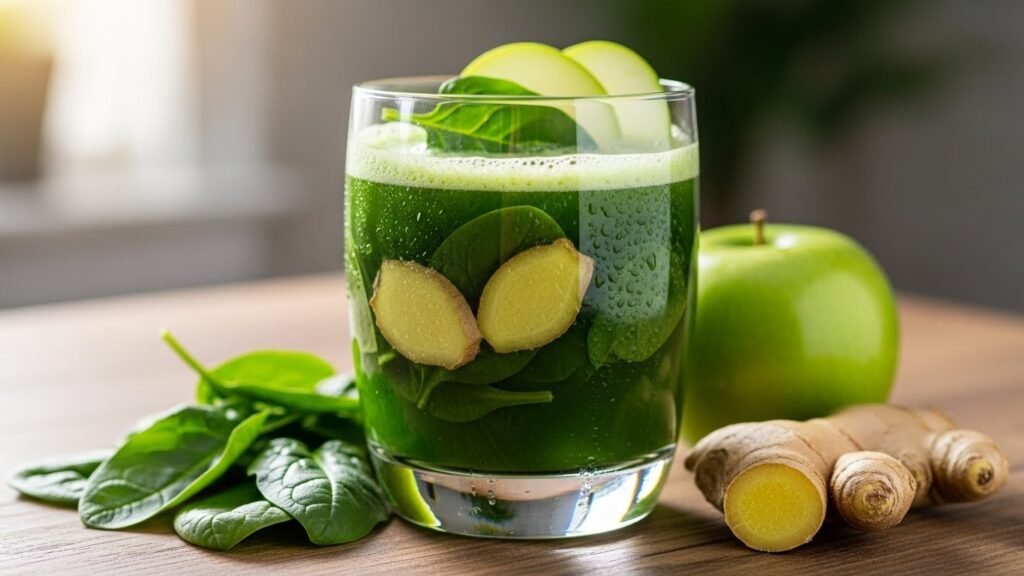
This is widely thought to be the finest juice for digestion in 2026. It combines the nitrate-rich benefits of dark leafy greens with the prebiotic power of apple pectin, making it an essential juice recipe for gut health.
- How it Supports Digestion: Spinach provides magnesium, which relaxes the muscles in the digestive tract, while ginger acts as a prokinetic, meaning it helps move food from the stomach into the small intestine faster.
- Fiber Content: By blending the spinach instead of just juicing it, you retain the fine cellulose fibers.
- Key Benefits:
- Feeds Bifidobacteria through apple pectin.
- Reduces upper GI bloating with gingerol.
- Supports the natural repair of the gut lining.
- Who Should Drink It: Those dealing with slow digestion or morning sluggishness.
- Recipe: 2 cups Spinach, 1 Green Apple, 1-inch Ginger, 1/2 Lemon.
- Best Time to Drink: 30 minutes before breakfast.
- Fiber Tip: Add a teaspoon of the apple pulp back into the juice for extra “bulk.”
2. The Anti-Inflammatory Aloe & Cucumber Refresher
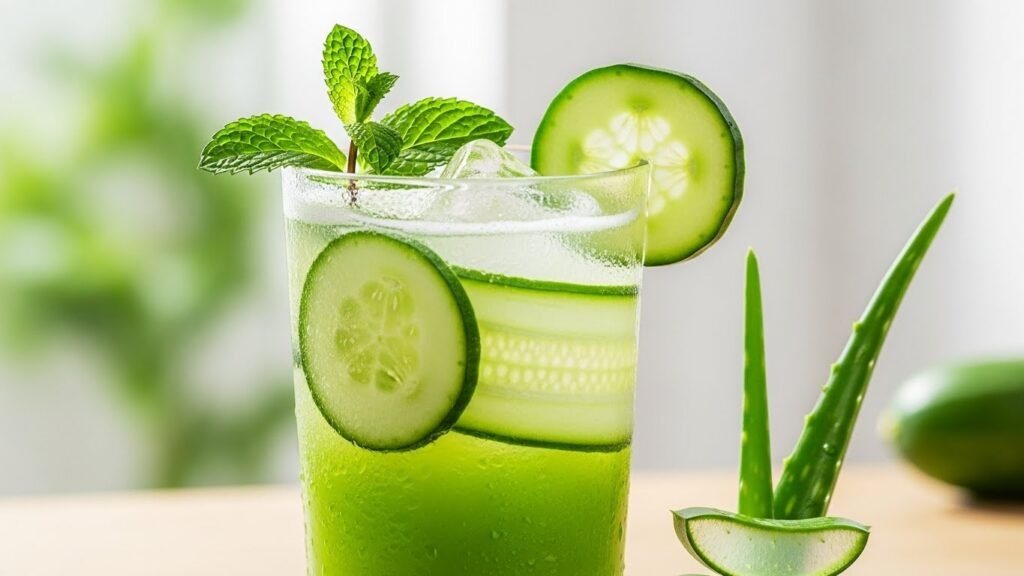
If your gut feels “reactive” or inflamed, this low-acid, hydrating juice recipe for gut health is the 2026 gold standard for cooling things down.
- How it Supports Digestion: Aloe vera contains polysaccharides that soothe the delicate mucosal membranes. Cucumber provides essential hydration to the colon.
- Fiber Content: This is naturally lower in fiber, focusing on soothing rather than bulking.
- Key Benefits:
- Cools the “fire” of acid reflux.
- Deeply hydrates the colon to prevent hard stools.
- Naturally alkaline to balance stomach acidity.
- Who Should Drink It: People with sensitive stomachs, reflux, or “hot” digestion.
- Recipe: 1 large Cucumber, 2 tbsp Pure Aloe Vera Gel, juice of 1/2 Lime, Mint leaves.
- Best Time to Drink: 20 minutes before breakfast on an empty stomach.
- Fiber Tip: Blend a small amount of the cucumber skin to keep some insoluble fiber.
3. The Pineapple & Fennel “Bloat-Banisher”
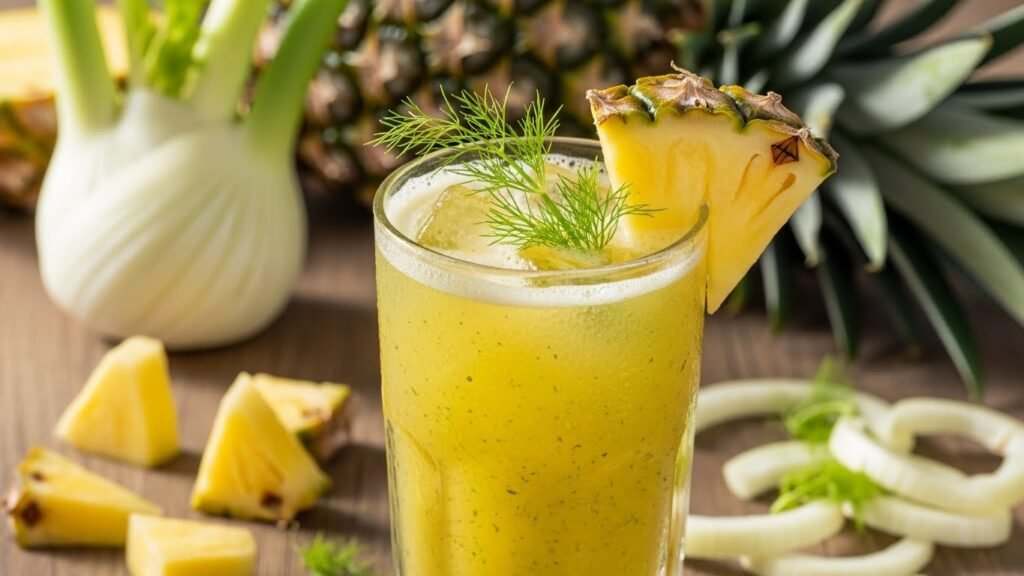
Fennel is the best traditional way to get rid of gas, and modern research in 2026 backs its usage as a potent antispasmodic, making it a powerful addition to any juice recipe for gut health.
- How it Supports Digestion: Pineapple contains bromelain, a group of enzymes that break down proteins. Fennel relaxes the smooth muscles of the intestines.
- Fiber Content: Fennel is very fibrous; using a slow juicer lets you get the juice while leaving enough “micro-fiber” to support the gut.
- Key Benefits:
- Breaks down heavy proteins (meat and dairy) directly.
- Eliminates trapped gas and reduces cramps.
- Speeds up “gastric emptying” so you don’t feel heavy.
- Who Should Drink It: Anyone who feels bloated after lunch or dinner.
- Recipe: 1 cup Pineapple chunks, 1/2 Fennel bulb, 1/2 cup Mint leaves.
- Best Time to Drink: 15–20 minutes after a meal.
- Fiber Tip: Don’t throw away the fennel fronds! Chop them up and add them back to the liquid for extra prebiotic fiber.
4. Golden Papaya & Turmeric Digestive Aid
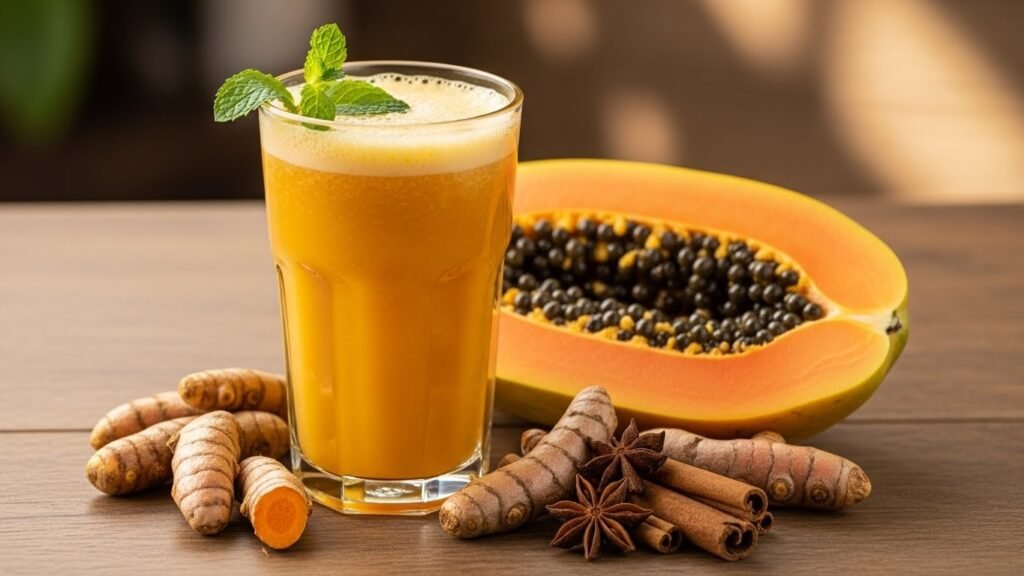
Papaya has long been renowned as the “king of digestive fruits,” and for good reason; its natural enzymes make it the perfect base for a juice recipe for gut health.
- How it Supports Digestion: Papain, the enzyme in papaya, is so excellent at breaking down protein that it’s sometimes used as a meat tenderizer. In your gut, it does the same for your food.
- Fiber Content: Papaya has a soft, soluble fiber profile that is very gentle on the colon.
- Key Benefits:
- Assists with protein malabsorption and bloating.
- Turmeric provides curcumin, a strong anti-inflammatory for the colon.
- Supports the “migrating motor complex” for regular movements.
- Who Should Drink It: Those on high-protein diets or people with “lazy” bowel syndrome.
- Recipe: 1/2 small Papaya (peeled), 1/2 inch fresh Turmeric root, 1 Orange.
- Best Time to Drink: Before a protein-heavy meal.
- Fiber Tip: Blend this as a “smoothie-juice” rather than using a traditional extractor to keep the creamy fiber.
5. Pear & Chia “Regularity” Elixir
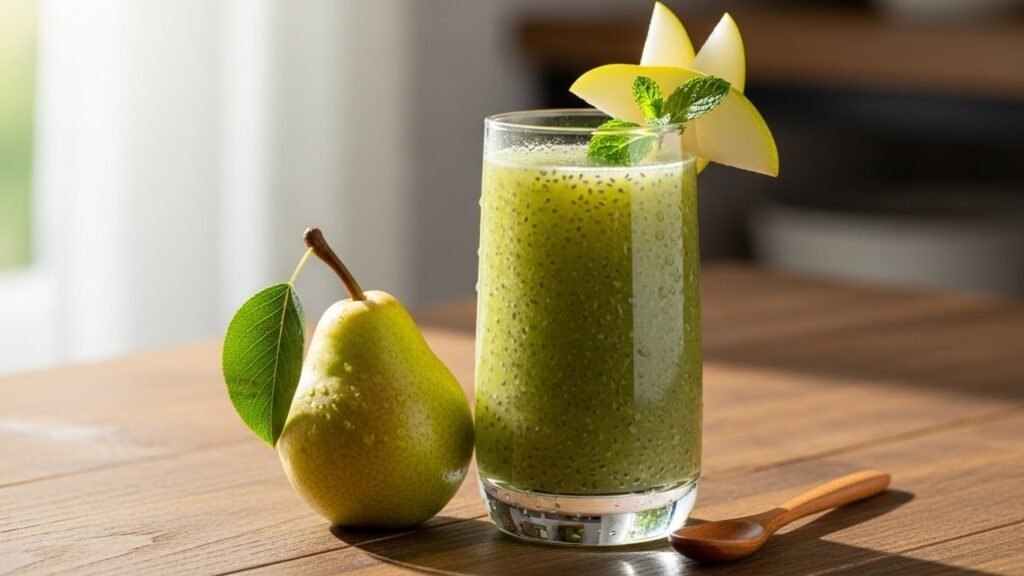
When it comes to juices for bloating and constipation, pears outperform almost every other fruit due to their high sorbitol content, making them an essential ingredient in any juice recipe for gut health.
- How it Supports Digestion: Sorbitol is a sugar alcohol that draws water into the large intestine, making stools softer and easier to pass.
- Fiber Content: Extremely high when paired with chia seeds.
- Key Benefits:
- Naturally relieves constipation without harsh laxatives.
- Chia seeds provide the “gel” fiber that protects the gut wall.
- High in Vitamin C to support gut lining repair.
- Who Should Drink It: Anyone struggling with occasional constipation.
- Recipe: 2 large Pears, 1 tbsp Chia Seeds (pre-soaked), pinch of Cinnamon.
- Best Time to Drink: Late afternoon to assist with next-morning regularity.
- Fiber Tip: This is a “must-blend” recipe. You need the fiber in a pear, but juicing it takes it out.
6. The Beet & Carrot “Liver-Gut” Connection
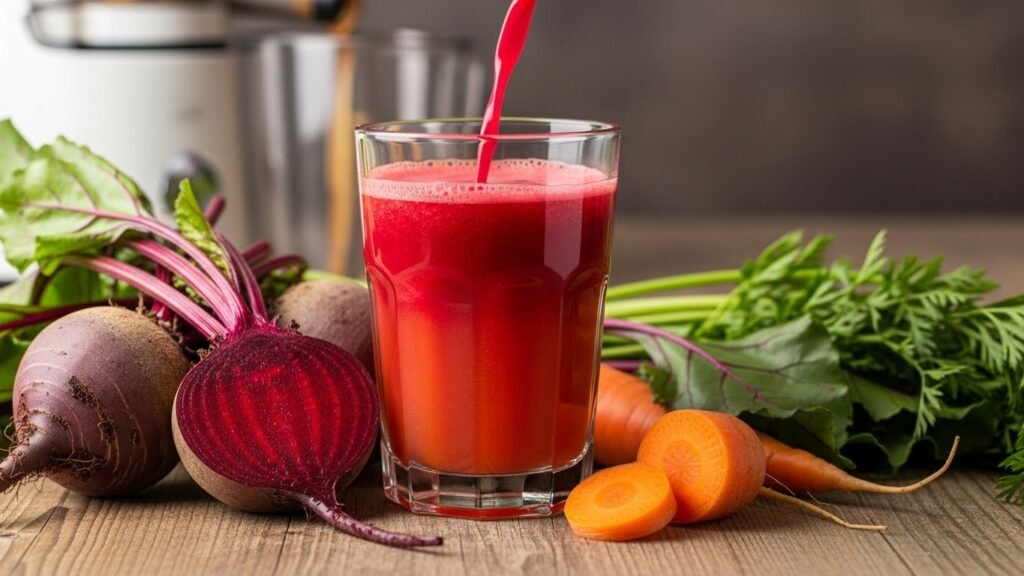
You can’t have a healthy gut without a healthy liver because the liver makes bile, which is needed to break down fats. This is why finding the right juice recipe for gut health often focuses on ingredients that support both of these vital organs.
- How it Supports Digestion: Beets help digestion by making the gallbladder release bile, which acts as a natural lubricant for the intestines.
- Fiber Content: Moderate, but rich in antioxidants that protect the gut wall.
- Key Benefits:
- Flushes out the liver and gallbladder.
- Carrots are a good source of beta-carotene, important for the health of the intestinal mucosa.
- Increases blood flow to the digestive tract.
- Who Should Drink It: People with slow digestion or “pale” stools (a sign of low bile).
- Recipe: 1 medium beetroot, 3 carrots, and 1/2 lemon.
- Best Time to Drink: Middle of the morning or before a workout.
- Fiber Tip: Use the leftover beet pulp in veggie burgers or muffins later!
7. Kiwi & Celery Hydration & Transit Juice
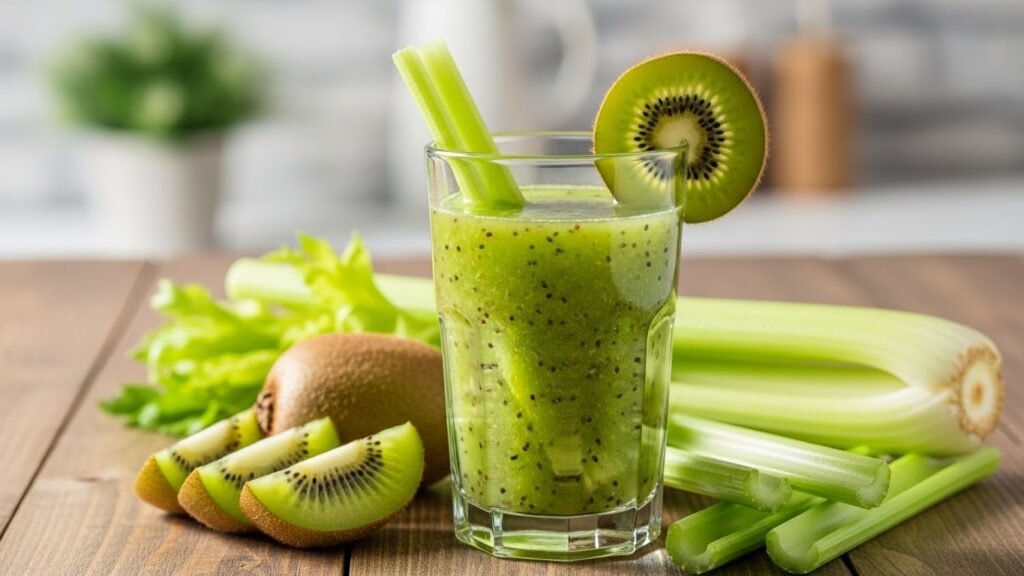
Kiwi is a 2026 favorite and an excellent juice recipe for gut health because of actinidin, an enzyme that specifically targets dairy and meat proteins.
- How it Supports Digestion: Studies have shown that kiwi can reduce the “transit time” of food, meaning it helps waste leave the body faster.
- Fiber Content: Kiwi seeds and flesh provide excellent bulk.
- Key Benefits:
- Significantly reduces symptoms of IBS-C (constipation-predominant).
- Celery provides mineral salts that assist the stomach in creating hydrochloric acid (HCl).
- Low in sugar, making it keto-friendly.
- Who Should Drink It: People with low stomach acid or chronic slow transit.
- Recipe: 2 Kiwis (skin on if organic, for 3x the fiber!), 4 stalks of Celery.
- Best Time to Drink: First thing in the morning.
- Fiber Tip: If you can handle the texture, juicing the kiwi with the skin on provides a massive fiber boost.
8. Pomegranate & Berry “Keystone” Punch
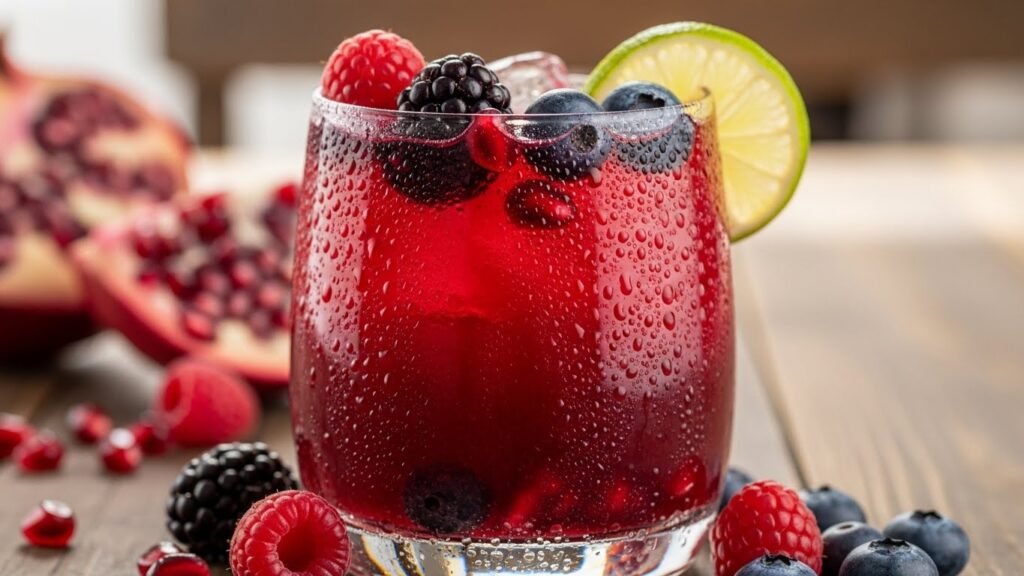
In 2026, we focus on feeding “keystone” bacteria like Akkermansia muciniphila, which thrives on the polyphenols present in red and purple fruits. Using a targeted juice recipe for gut health is one of the most efficient ways to deliver these concentrated antioxidants directly to your microbiome.
- How it Supports Digestion: Polyphenols serve as prebiotics. This juice “feeds” the bacteria that keep your gut lining thick and strong.
- Fiber Content: High in antioxidants, moderate in fiber.
- Key Benefits:
- Strengthens the “gut barrier” to prevent leakiness.
- Protects against oxidative stress in the colon.
- Increases the diversity of the microbiome.
- Who Should Drink It: Anyone looking to improve their immune system and microbiome diversity.
- Recipe: 1/2 cup Pomegranate seeds, 1 cup Mixed Berries (Raspberries/Blueberries).
- Best Time to Drink: With a meal.
- Fiber Tip: Avoid straining the berry seeds; they are great for “scrubbing” the intestinal walls.
9. Cabbage & Apple Healing Juice
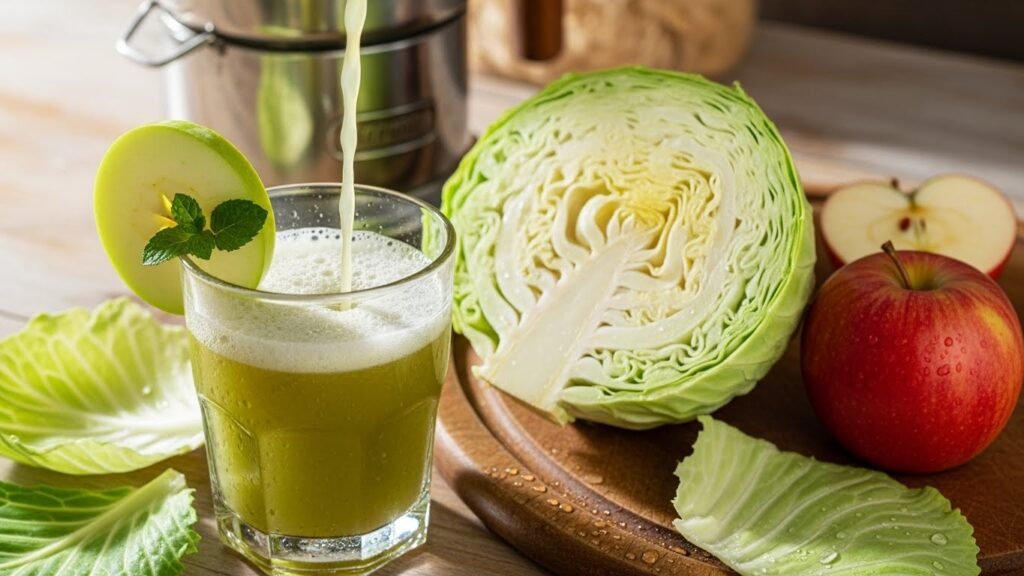
Cabbage juice is a legendary remedy for ulcers and gastritis that has seen a huge resurgence in 2026 as a premier juice recipe for gut health. Rich in S-Methylmethionine (often called Vitamin U), it is widely praised for its ability to support the repair of the stomach lining and reduce inflammation throughout the digestive tract.
- How it Supports Digestion: Cabbage is rich in L-glutamine and “Vitamin U,” which provide the actual building blocks for the gut to repair its own lining.
- Fiber Content: High in sulfur-based compounds that help clear “bad” bacteria.
- Key Benefits:
- Heals stomach ulcers and acid erosion.
- Balances the overgrowth of H. pylori.
- Apple pectin makes the cabbage juice taste good and adds soluble fiber.
- Who Should Drink It: People who have had ulcers, gastritis, or frequent “burning” feelings.
- Recipe: 1/4 small Green Cabbage, 2 Green Apples.
- Best Time to Drink: Two small 4oz portions a day.
- Fiber Tip: Use a slow masticating juicer to keep the “life” in the cabbage enzymes.
10. Watermelon & Mint “Restorative” Cooler
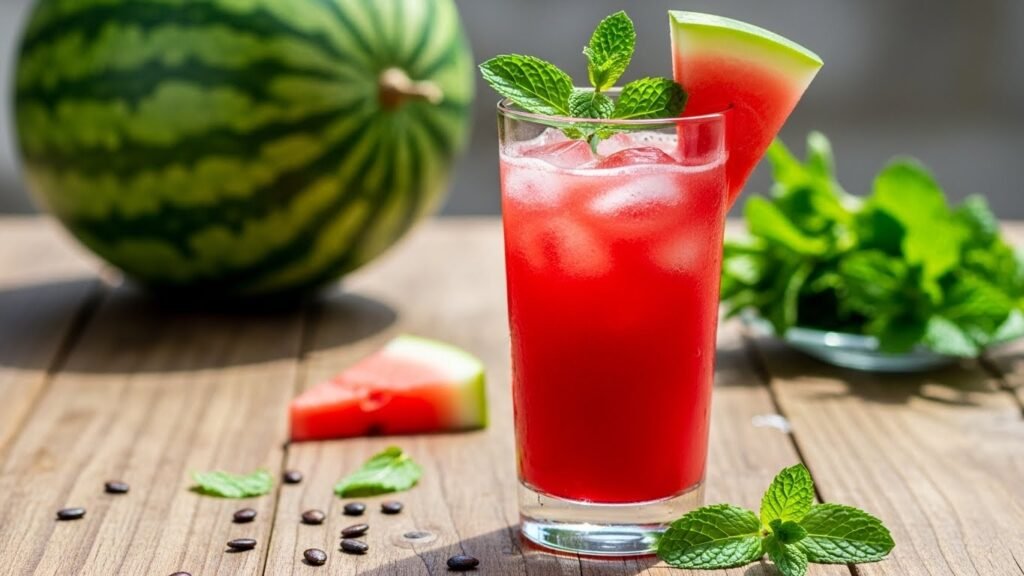
When the gut is stressed, sometimes it needs “low-residue” hydration that requires zero effort to digest, which is why a targeted juice recipe for gut health can be so beneficial.
- How it Supports Digestion: Watermelon is mostly water and minerals, which helps “flush” the system without putting a load on the pancreas or stomach.
- Fiber Content: Very low, which is sometimes necessary for “resting” the gut.
- Key Benefits:
- Reduces water retention and “false” bloating.
- Mint relaxes the stomach muscles to stop cramping.
- Provides citrulline for better blood flow.
- Who Should Drink It: On hot days or during a “gut rest” day.
- Recipe: 2 cups Watermelon, 1 handful of Mint.
- Best Time to Drink: Afternoon.
- Fiber Tip: Blend the watermelon with the “white” part of the rind; it’s where the most nutrients and fiber are stored.
Comparison Table: Gut Health Juice Benefits
| Juice Name | Main Gut Benefit | Fiber Level | Best For |
| Green Powerhouse | Prebiotic Support | High (if blended) | Daily Regularity |
| Aloe Refresher | Soothing/Cooling | Low | Heartburn & Reflux |
| Pineapple/Fennel | Gas Reduction | Medium | Bloating after meals |
| Papaya/Turmeric | Protein Breakdown | Medium | Slow/Heavy Digestion |
| Pear & Chia | Natural Laxative | Very High | Constipation |
| Beet & Carrot | Bile/Liver Support | Medium | Detox & Flow |
| Kiwi & Celery | Fast Transit | Medium | Chronic Constipation |
| Berry Punch | Diversity/Immunity | Medium | Microbiome Health |
| Cabbage/Apple | Lining Repair | High | Ulcers & Gastritis |
| Watermelon/Mint | Hydration/Rest | Low | Cramps & Heat |
How to Maximize Fiber in Juices (The 2026 Way)
One of the biggest criticisms of juicing is the loss of fiber. But by 2026, we have come up with wiser techniques to make sure every juice recipe for gut health is as high in fiber as possible.
Using these modern methods ensures that your favorite juice recipe for gut health provides the necessary roughage to support your microbiome while delivering concentrated nutrients.
Juicing vs. Blending for Fiber
When you use a standard extractor, you are basically drinking the “blood” of the plant and tossing away the “bones” (the fiber). To fix this and ensure your juice recipe for gut health is as effective as possible, try adding a portion of the pulp back into your glass.
By incorporating that fiber, you transform a simple drink into a more complete juice recipe for gut health that supports digestion rather than just providing a quick sugar hit.
- Use a Masticating Juicer: These “slow” juicers keep more of the structural fiber in the liquid.
- The Hybrid Method: Juice your hard vegetables (like carrots or beets) and then pour that juice into a blender with your soft fruits or greens (like spinach or berries).
Keeping the Pulp
Don’t throw away the pulp! It has the fiber that your gut needs to keep you from getting constipated.
- You can stir 1–2 tablespoons of the pulp back into your juice.
- You can also use it as a base for crackers, soups, or even plant-based “pulp burgers.”
Adding “Fiber Boosters”
If your juice is naturally low in fiber, you can stir in these 2026-approved boosters:
- Pre-soaked Chia Seeds: Adds mucilaginous fiber that protects the gut.
- Ground Flaxseeds: Provides lignans and insoluble fiber.
- Psyllium Husk: The “gold standard” for bulking stool (start with just 1/2 teaspoon).
- Inulin Powder: A pure prebiotic fiber that dissolves completely.
Juicing for Gut Health: Best Practices in 2026
To ensure your juice remains a “healing drink” and not a “sugar bomb,” follow these industry-standard best practices:
- Prioritize Cold-Pressed: Heat from high-speed juicers can denature sensitive enzymes like bromelain or papain. Whenever you can, use a cold-press or masticating juicer.
- Drink Fresh: Enzymes and antioxidants start to break down as soon as they come into contact with air (oxidation). Try to drink your juice within 15 minutes of producing it.
- The 80/20 Veggie-to-Fruit Ratio: This is the most crucial rule for healthy gut drinks 2026. To keep the sugar low, try to use 80% veggies and 20% fruit. Too much sugar can let Candida and other opportunistic fungi grow in the stomach.
- Don’t Chug; Sip: Digestion starts in the mouth with saliva. Swishing the juice about in your mouth before swallowing helps your stomach know that food is approaching.
Common Gut-Health Juicing Mistakes to Avoid
- Relying on “Detox” Marketing: Your liver and kidneys conduct the detoxification. Juice just gives them the vitamins and minerals they need to do their job. Stay away from things that say they can “melt away fat.”
- Drinking Too Much on an Empty Stomach: This can make you feel sick if you have a particularly sensitive stomach. If this happens, consider eating a handful of raw walnuts with your juice.
- Ignoring Seasonal Produce: In 2026, we know that eating with the seasons helps us feed a wider range of microorganisms. Don’t drink the same green juice every day.
- Using Non-Organic for “High-Volume” Juices: Juicing concentrates the contents and any pesticides. If you want to use “thin-skinned” produce like celery, spinach, and apples, always strive to buy organic.
FAQ
Are juices good for gut health?
Yes, but only if they are mostly veggies and low-sugar fruits. They have enriched prebiotics and enzymes that the body can easily absorb, giving the digestive system a “rest” while still getting the nutrition it needs.
Which juice has the most fiber?
Smoothie-juices or juices with additional chia, flax, or pear pulp have the greatest fiber. A Pear and Chia blend is usually the best choice for digestive health because it has a lot of fiber.
Can juice repair the gut?
Juice can’t “cure” a medical issue on its own, but components like cabbage (which is high in Vitamin U) and aloe vera help rebuild the lining of the intestines and lower inflammation.
Are blended juices better for digestion?
Yes, for most people. Blending preserves the fiber whole, which slows down the absorption of sugar and feeds the microorganisms in the gut. But for people with severe digestive problems, clear juicing may be better temporarily.
Can juices help with bloating and constipation?
Fennel, ginger, and pineapple juices are good for bloating, and pear, prune, and kiwi drinks are very good for easing constipation.
How often should I drink juices that are good for my gut?
Most people find that one 8–10 ounce serving a day is the “sweet spot.” This gives a constant flow of prebiotics without flooding the body with too much liquid at once.
Does juicing help with SIBO or IBS?
It depends on what you put in it. People with SIBO may need to stay away from high-FODMAP liquids like apple or pear and stick to low-FODMAP juices like cucumber, ginger, and carrot.
Can I juice for a “gut cleanse”?
We like the term “gut reset” better in 2026. Drinking hydrating, nutrient-dense juices for 24 hours can help reduce inflammation, but for long-term health, you need a variety of solid foods.
Disclaimer
The information provided in this article is for educational and informational purposes only and is not intended as medical or nutritional advice. You should utilize juicing as an addition to a balanced diet, not as a replacement for it. If you have a long-term illness like Crohn’s disease, ulcerative colitis, or type 2 diabetes, talk to your doctor or a registered dietitian before starting a new juicing routine.
Conclusion
In conclusion, it is clear that a healthy life starts in the gut as we look ahead in 2026. When you add juices for gut health to your daily routine, you’re not just drinking something; you’re giving your microbiome the high-quality fuel it needs to stay healthy.
The key to success is to stop drinking the “sugar-water” juices of the past and start using the fiber-rich juice recipes and “whole-juicing” methods of today.
If you’re using a Pineapple-Fennel elixir to get rid of bloating or a Cabbage-Apple blend to calm your stomach lining, remember that consistency is more important than perfection.
Start by adding one gut-friendly juice to your morning routine, pay attention to how your body reacts, and enjoy the amazing energy and clarity that come from having a perfectly balanced digestive system!
Share Your Juice Experience
There are no reviews yet. Be the first one to write one.