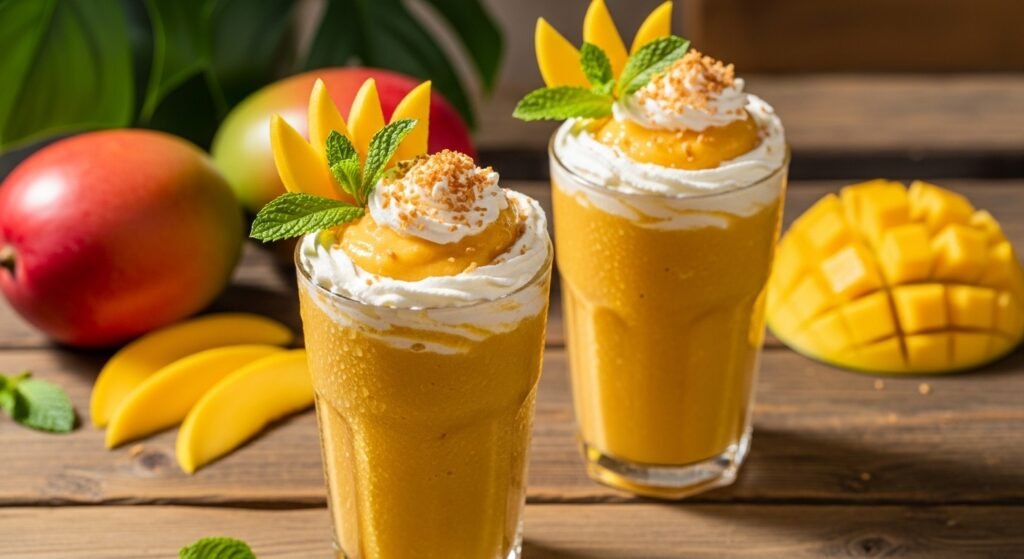
Why does the mango smoothie have such a special place in our hearts? It’s a question worth pondering, especially when you consider the sheer joy a well-made mango smoothie can bring.
Few things can whisk you away quite like the taste of a perfectly ripe mango, its flavor a delightful blend of sweetness and a hint of tartness. The mango, sometimes dubbed the “King of Fruits,” is a star ingredient in a beloved global drink: the mango smoothie.
A truly good mango smoothie? It’s like drinking a ray of sunlight. It’s remarkably creamy, with a natural sweetness that gives it a dessert-like quality, despite being loaded with vital nutrients. Its worldwide appeal comes from its knack for providing a burst of tropical taste without requiring much work.
If you’re looking for a refreshing drink after a workout, a speedy breakfast, or a healthy snack in the afternoon, a mango smoothie hits the spot. It’s a great way to indulge your sweet tooth while still getting a good dose of vitamins.
The Foundation: Simple Classic Mango Smoothie Recipes
Before we get into the fun stuff, let’s nail down the fundamental mango smoothie recipe. This straightforward, three-ingredient recipe consistently delivers a thick, refreshing, and utterly delightful outcome.
Two Ways to Blend: Quick & Fresh vs. Thick & Frozen
Here are two approaches to making a classic mango smoothie, whether you prefer fresh ingredients or that dense, icy thickness.
Quick & Fresh Mango Smoothie (With Yogurt)
This is a great option if you have fresh mangoes and want a slightly thinner, protein-boosted smoothie.
Ingredients:
- 1 ripe mango, peeled and diced
- 1 cup yogurt (plain or flavored)
- 1/2 cup milk (dairy or non-dairy)
- 1 tablespoon honey or agave syrup (optional)
- Ice cubes (as needed)
Instructions:
- In a blender, combine the diced mango, yogurt, and milk.
- Blend until smooth and creamy.
- If desired, add honey or agave syrup to sweeten.
- Blend again briefly to incorporate.
- Add ice cubes to the blender and blend until the desired consistency is reached.
- Pour into glasses and serve immediately.
Classic Thick Mango Smoothie Recipe (Frozen Fruit Focus)
This formula relies on frozen fruit for a texture so thick you can eat it with a spoon.
Classic Mango Smoothie Ingredients
| Ingredient | Quantity | Purpose & Benefit |
| Frozen Mango Chunks | One and a half cups. | The foundation of taste, mouthfeel, and temperature. Packed with Vitamin C and Vitamin A. |
| Liquid Base | Half a cup. | Milk—dairy, almond, coconut, or oat—or coconut water works well for a smooth blend. |
| Sweetener (Optional) | One teaspoon of honey, agave, or maple syrup should do the trick; tweak the amount depending on how sweet your mango is. | Adjust to the sweetness of your mango. |
Step-by-Step Instructions
- Get the Blender Ready: Start with your liquid foundation. This safeguards your blender’s blades and generates a powerful vortex, ensuring effective blending.
- Add the Frozen Mango: Put the frozen mango chunks right on top of the liquid. When using fresh mango, you’ll need to include four to six ice cubes to achieve the desired thickness.
- Sweeten (if needed): Add your sweetener, if you like. Ripe, frozen mango frequently needs no added sweetness.
- Mixing: Begin blending on a low setting to initially break apart the frozen pieces. Gradually ramp up the speed until it’s on high. Blend the ingredients for a good 45 to 60 seconds. You’re aiming for a silky, creamy consistency—no lumps, no frosty remnants.
- Serve Right Away: Pour it into a glass and savor the tropical escape!
Next-Level Blends: Exciting Mango Smoothie Variations
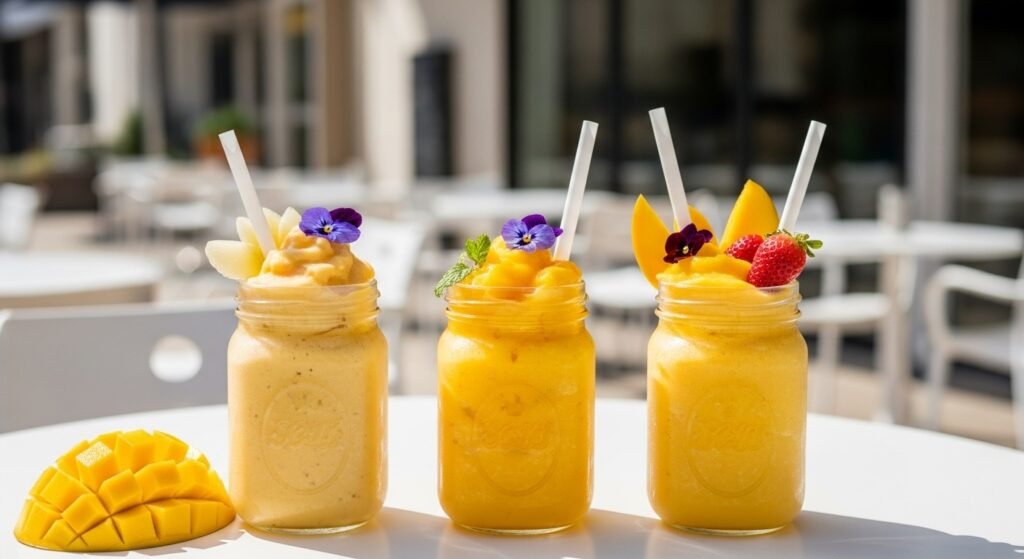
Mango smoothies are a delicious treat, and there are countless ways to mix things up. This straightforward mango smoothie recipe is a great starting point, ready to be customized with other fruits, leafy greens, or a protein supplement. Here are three tropical pairings worth experimenting with.
Creamy Comfort: The Mango Banana Smoothie
A velvety embrace. Incorporating a banana into your smoothie blend elevates its inherent sweetness, resulting in a decadently creamy, milkshake-esque consistency. The mango banana smoothie likely reigns supreme in terms of popularity.
- Key Swap: Substitute one cup of frozen mango with a combination of one cup of frozen mango and half a frozen banana, sliced into coins.
- An added advantage: The potassium in the banana, together with the Vitamin C found in the mango, creates a superb post-workout drink.
- Pro Tip: For a protein boost, consider stirring in a couple of tablespoons of plain Greek yogurt or a scoop of vanilla protein powder.
Sweet & Tart: The Mango Strawberry Smoothie
The strawberries’ lively, tart sweetness perfectly complements the mango’s creamy, buttery texture, resulting in a flavor that’s both refreshing and uplifting. The mango strawberry smoothie is a real showstopper, both in looks and taste.
- Key Swap: Substitute 1 cup of frozen mango and 1/2 cup of frozen strawberries.
- Added Benefit: This combination provides a significant surge of antioxidants and Vitamin C, which is excellent for bolstering the immune system.
- Color Tip: For a stunning layered drink, start by blending the mango. Pour half of it into a glass. Next, add the strawberries to the remaining mango in the blender, puree once more, and then carefully pour the red layer on top.
Ultimate Tropical Escape: The Mango Pineapple Smoothie
Craving a vibrant, zesty burst of tropical goodness? The mango pineapple smoothie is the answer. The enzymes in pineapple help with digestion, and its delightful tartness balances the mango’s sugary flavor.
- Key Swap: Substitute 1 cup of frozen mango and 1/2 cup of frozen pineapple chunks.
- Liquid Adjustment: Replace the milk with pure coconut water. This not only amplifies the tropical vibe but also provides a good dose of electrolytes.
- Flavor Boost: A tiny splash of lime juice will really brighten things up.
Nutritional Power: Health Benefits of a Mango Smoothie
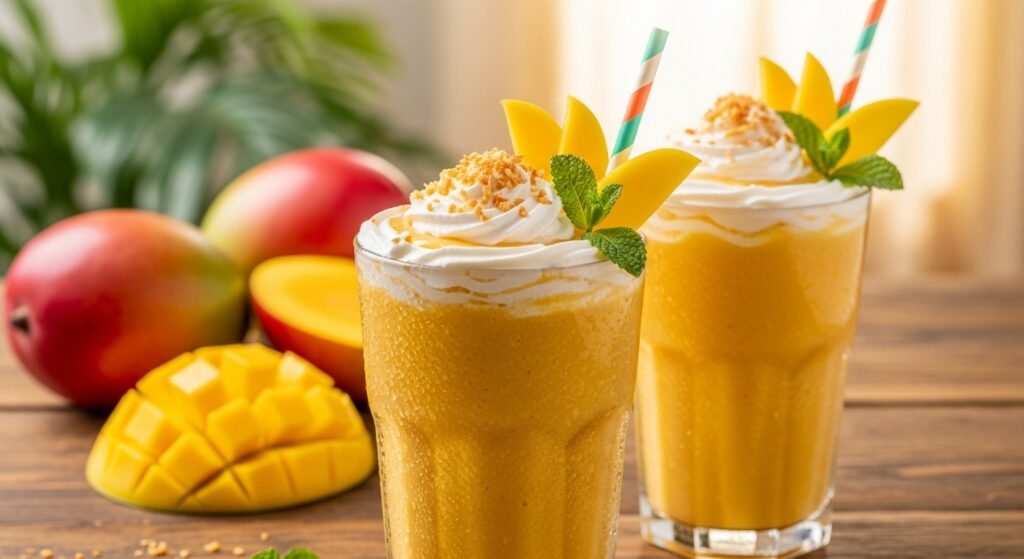
Mango smoothies pack a nutritional punch, offering a range of health advantages. Sipping a mango smoothie is a tasty way to give your health a boost. Mangoes are nutritional powerhouses, and they pack a serious punch:
- Immune Support: Immune support is bolstered by mangoes, thanks to their generous vitamin C content. This vitamin plays a vital role in keeping the immune system humming and helps cells heal.
- Eye Health: They’re a great source of vitamin A, which is essential for maintaining good vision.
- Digestive Wellness: Digestive health benefits from mangoes, thanks to their dietary fiber content, which encourages regular bowel movements. They also include enzymes that assist in protein digestion.
- Antioxidant Powerhouse: This fruit is brimming with polyphenols, which serve as potent antioxidants. They work to reduce inflammation and neutralize free radicals within the body.
Pro Tips for the Perfect Thick & Creamy Smoothie
Crafting the ideal thick and creamy smoothie requires a few key tricks. A truly exceptional mango smoothie should be so thick you could eat it with a spoon. For the best texture, keep these expert guidelines in mind:
- Prioritize Frozen Fruit: The main requirement is that most of the components should be frozen. Pre-freeze your mango, along with any extras like bananas destined for a mango-banana smoothie. Using fresh fruit and just ice will give you a drink that’s more watery, icy, and less tasty.
- Measure Liquid Carefully: Begin with the least quantity of liquid needed, which is often about 1/2 cup when using 1.5 cups of frozen fruit. If your blender starts to have a hard time, feel free to add additional liquid, a tablespoon at a time. Just remember, it’s not as simple to remove liquid once it’s in there.
- Use Natural Thickeners: A tablespoon of nut butter—almond or cashew, for example—or a quarter of a ripe avocado can introduce beneficial fats, transforming the smoothie into a luxuriously smooth and creamy experience, all without significantly changing the taste.
- The High-Powered Blender: Though any blender will do the job, a high-speed model is the real MVP. It guarantees the frozen bits get completely obliterated, resulting in that smooth, velvety mouthfeel. This is especially important when you’re tossing in fibrous things like mango and strawberry.
FAQ
Q1: Should I use fresh or frozen mango?
Frozen mango is the way to go if you want the nicest texture. Frozen fruit cuts off the need for extra ice, which can dilute the taste. If you’re working with fresh mango, chop it into cubes and then freeze them overnight. After that, you’re ready to combine.
Q2: What’s the best liquid base for a mango smoothie?
What you want to achieve will dictate the approach.
- Creaminess: Dairy or Oat Milk.
- Lightness and hydration: Coconut water or filtered water.
- Protein: A high-protein milk or a liquid protein shake serves as the foundation.
Q3: Can I add vegetables to my mango smoothie without ruining the taste?
Absolutely! The robust, sugary essence of mango readily conceals the more subdued flavors of greens such as spinach or kale. Begin with a modest amount of fresh spinach in your mango pineapple smoothie; you’ll reap the benefits without even noticing it’s there.
Share Your Juice Experience
Perfect Mango Smoothies Every Time
This guide covers everything I needed to know about mango smoothies—from recipes to nutrition to tips for perfect texture. The smoothies are creamy, refreshing, and energizing. I’ve tried several recipes, and each one turned out perfectly.
Delicious, Easy, and Informative
I really enjoyed this resource. The how-to instructions are clear, and the expert tips make a noticeable difference in flavor and texture. The health benefits are well explained, so I feel good knowing I’m drinking something nutritious and delicious every day.
Sweet, Smooth, and Full of Health Benefits
This guide makes it so easy to create the perfect mango smoothie. The recipes are simple to follow, the tips are very helpful, and the health benefits are clearly explained. Every smoothie I’ve tried tastes amazing, and I love knowing it’s packed with vitamins and nutrients.