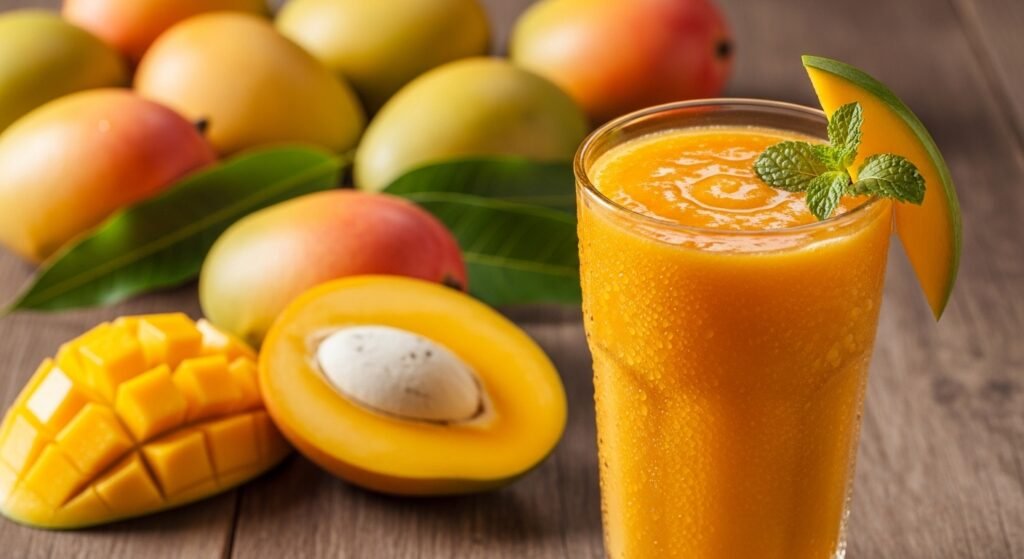
Mango juice, a true delight, offers a wealth of benefits. This “King of Fruits,” renowned worldwide, is cherished not only for its exceptional sweetness and vivid hue but also for the liquid treasure it produces: mango juice.
This cherished drink is a go-to refreshment, especially in the warm climes of the tropics and subtropics, delivering a burst of sunshine with every sip.
But beyond its obvious appeal, what makes a glass of mango juice such a potent ally in a healthy eating plan?
This guide will explore every facet of this remarkable beverage. Let’s take a look at its remarkable nutritional value, then we’ll examine the significant health advantages it offers.
We’ll also compare store-bought mango nectar juice with the fresh, handmade version.
Finally, I’ll give you a straightforward, step-by-step guide to making the freshest juice from the mango possible, right in your own home. Whether you’ve been sipping it since childhood or just discovered its charms, get ready to experience mango juice at its best.
What Exactly Is Mango Juice, and Why Does It Have Such a Devoted Following Around the World?
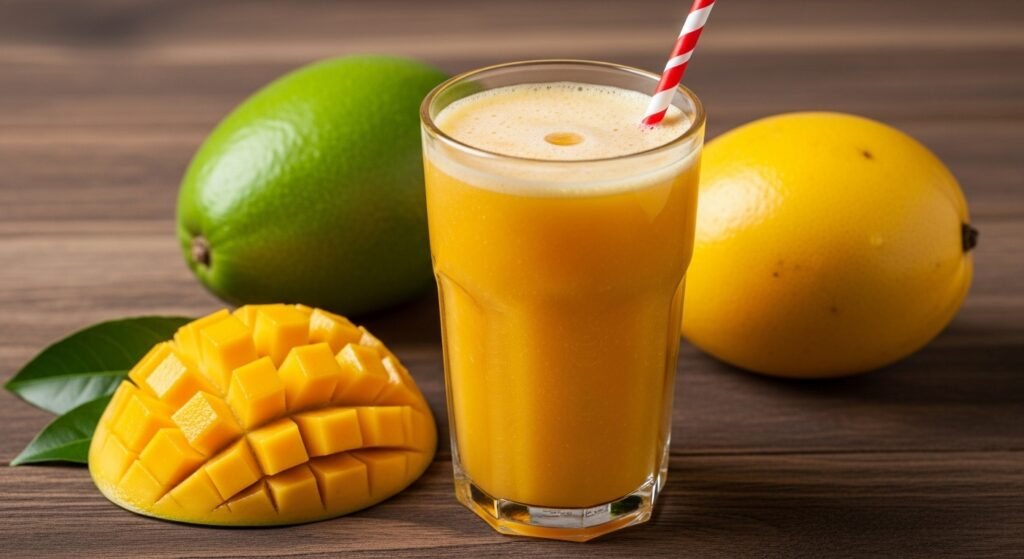
Mango juice, at its core, is a drink crafted from the flesh of the mature Mangifera indica fruit. Its reputation is built on a rich, luxurious mouthfeel, a sweetness that hits hard, and a scent that screams “tropical.” This beverage’s appeal knows no boundaries.
For countless people, a glass of mango juice mango conjures up images of summer, festivals, and joyous occasions. The taste is intricate, swinging from intensely sweet to a gentle tartness, a result of the mango’s type and how the mango and juice is made.
Though “juice” usually means it’s all fruit, the market has two main kinds:
- 100% Fresh Mango Juice: This is the real deal, just juice from the mango pulp, sometimes with a little water or sugar, depending on how sweet the fruit is. This is the most authentic version, and the one we recommend you make yourself.
- Mango Nectar: This is essentially a mixture of mango, juice concentrate, water, and a hefty dose of sugar or sweeteners. Though delicious, it lacks the same nutritional punch as the fresh version.
Knowing this distinction is key to getting the most health benefits from your drink. The unadulterated version offers an unparalleled concentration of natural vitamins, minerals, and antioxidants, far surpassing processed, sugar-laden options.
Unlocking the Health Benefits of Mango Juice
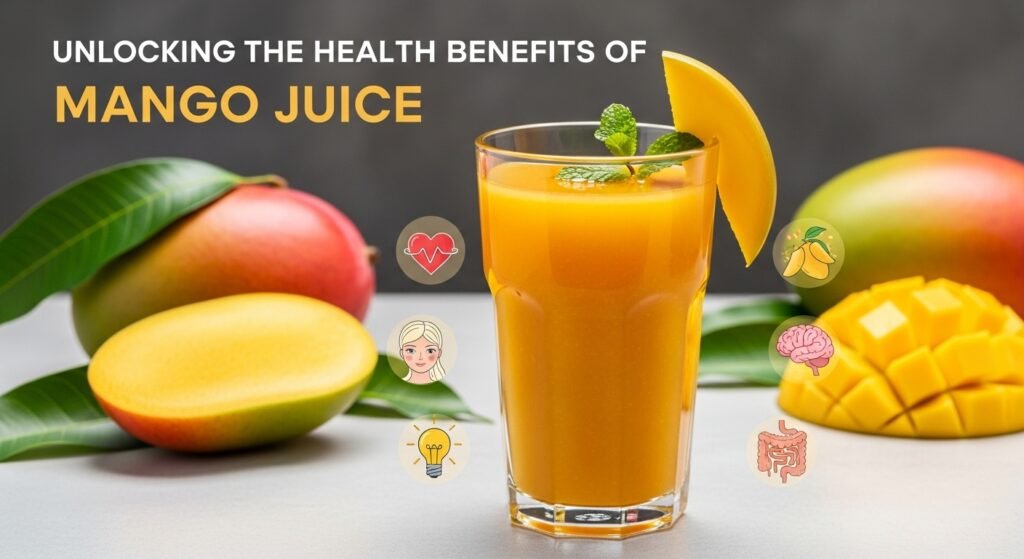
Drinking mango juice isn’t just a pleasurable experience; it’s a smart choice for improving your well-being. The fruit’s wealth of nutrients translates into a host of advantages for the body.
Supports a Robust Immune System
Mangoes are a fantastic source of Vitamin C, a potent antioxidant that’s essential for keeping the immune system humming.
- Vitamin C: Just one cup of mango juice can provide a substantial portion of your daily Vitamin C needs. This vitamin encourages the body to produce white blood cells, a key defense against sickness and disease.
- Beta-Carotene: The pigment that gives mango juice mango its bright yellow-orange hue is converted by the body into Vitamin A. This vitamin is vital for a well-functioning immune system and for keeping mucous membranes healthy.
Boosts Digestive Health
The juice retains some of the dietary fiber found in the whole fruit, providing digestive benefits.
- Enzymatic Support: Mangoes also contain digestive enzymes, such as amylases, which aid digestion. These enzymes play a crucial role in breaking down intricate carbohydrates, transforming them into simpler sugars. This process supports digestion and boosts how well your body absorbs nutrients.
- Fiber and Hydration: Regarding fiber, juicing does take away some of the insoluble variety, but the soluble fiber and the natural water found in the fruit still promote regular bowel movements and can ease constipation.
Enhances Vision and Eye Health
Mango juice is also good for your eyes, thanks to its high levels of Vitamin A and similar compounds.
- Zeaxanthin and Lutein: These two powerful antioxidants are particularly concentrated in the macula, the part of the eye responsible for central vision. They serve as a kind of natural sunscreen, filtering out damaging blue light and offering some protection against age-related macular degeneration (AMD).
- Preventing Night Blindness: Beta-carotene, a precursor to Vitamin A, is also vital for creating rhodopsin, the protein that enables us to see in dim light, thereby helping to prevent night blindness. Regularly drinking juice from the mango can be beneficial for your eyes, supporting their overall structure and function.
Promotes Radiant Skin and Hair
This tropical drink, packed with Vitamin C, Vitamin A, and other antioxidants, is a great choice for enhancing your beauty.
- Collagen Synthesis: Vitamin C is essential for collagen production, the protein that gives skin its structure and elasticity. This can diminish the look of wrinkles and foster a more youthful radiance.
- Free Radical Protection: The antioxidants found in the mango and juice blend combat free radicals generated by sun exposure and environmental pollutants, shielding skin cells from harm and delaying the aging process.
Supports Cardiovascular Wellness
Including mango juice in your diet can also benefit your heart.
- Potassium Rich: Mangoes are a solid source of potassium, a vital mineral and electrolyte that plays a key role in regulating blood pressure. Potassium counters sodium’s impact, helping to relax blood vessel walls and ease the burden on the heart.
- Magnesium and Antioxidants: Magnesium and antioxidants also play a role; they help to lower inflammation and boost circulation.
The Nutritional Snapshot of Mango Juice
To understand the advantages, consider the nutritional profile of unsweetened, fresh mango juice, based on a standard 1-cup (240ml) serving. Nutritional values can differ depending on the mango’s type and how ripe it is.
| Nutrient | Amount (Approximate) | Daily Value (DV) Contribution | Primary Function |
| Calories | 128 kcal | — | Energy source |
| Total Fat | 0.5 g | <1% | Negligible |
| Saturated Fat | 0 g | 0% | Negligible |
| Cholesterol | 0 mg | 0% | Cholesterol-free |
| Sodium | 2 mg | <1% | Low sodium |
| Total Carbohydrates | 33 g | 11% | Energy, fiber |
| Dietary Fiber | 0.8 g | 3% | Digestive aid |
| Total Sugars | 31 g | — | Natural fructose, glucose |
| Protein | 1 g | 2% | Minimal source |
| Vitamin C | 50-60 mg | 60%+ | Immune support, collagen synthesis |
| Vitamin A (as RAE) | 85-90 mcg | 10%+ | Vision, cell growth |
| Potassium | 250-280 mg | 5%+ | Blood pressure regulation |
| Folate (B9) | 10-15 mcg | 3-4% | Cell division, DNA synthesis |
| Magnesium | 15 mg | 4% | Muscle and nerve function |
Note on Sugar: When you drink juice, it’s best to be careful. The sugar content is more concentrated than in the whole fruit because most of the fiber is gone.
Mango Nectar Juice vs Fresh Mango Juice: A Crucial Distinction
If you’re looking for mango juice at the store, you’ll have to choose between mango nectar juice and something that says “100% juice.” Knowing the basic differences is important for your health and what you want to eat.
| Feature | Fresh, Homemade Mango Juice | Commercial Mango Nectar Juice |
| Fruit Content | 98–100% pure juice from the mango pulp. | Typically 25–50% fruit juice or concentrate. |
| Added Sugar | None. The sweet taste comes solely from the mango juice mango. | Contains significant amounts of high-fructose corn syrup, cane sugar, or other caloric sweeteners. |
| Nutritional Density | High. The highest levels of Vitamin C, A, and polyphenols are present. | Lower. Nutrients are diminished through the processes of dilution by water and sugar. |
| Pulp and Fiber | Contains some natural pulp, which offers modest quantities of dietary fiber. | Conversely, it is frequently subjected to extensive filtration, resulting in minimal to no fiber content. |
| Taste Profile | Rich and complex, significantly influenced by the specific mango variety employed. | Generally uniform, excessively sweet, and less complex, often due to the inclusion of sweeteners. |
| Preservatives | Absent. Must be drunk within two to three days. | Preservatives like potassium sorbate and sodium benzoate are used to prolong its shelf life. |
The Case Against Mango Nectar Juice
Although mango nectar juice is legally mandated to have some fruit solids, the drink is engineered to be sweet, shelf-stable, and inexpensive. The main downside is the large amount of added sugars. Drinks loaded with added sugars are linked to a higher likelihood of gaining weight, developing Type 2 diabetes, and experiencing heart problems.
If you’re aiming for better health and nutrition, your best bet is to get 100% pure mango juice, or better yet, create it yourself. When you’re shopping for juice, keep an eye out for labels that clearly say “100% Juice.” Avoid anything with added sugars or high-fructose corn syrup in the ingredients.
How to Make Mango Juice at Home: Extracting the Purest Juice From the Mango
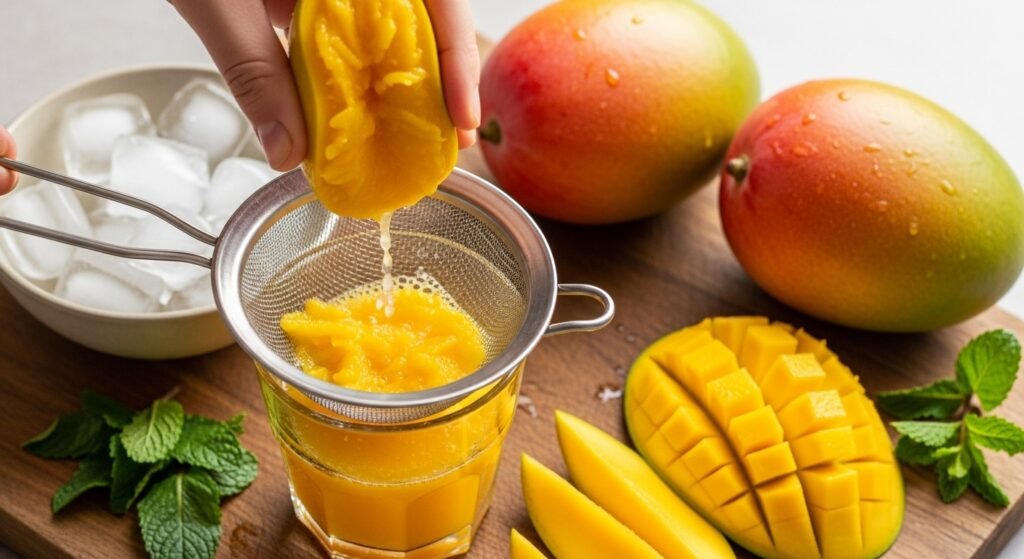
Making mango juice at home gives you the power to dictate the quality, sweetness, and texture. This way, you get the most out of the mango and juice itself. It’s surprisingly easy, needing just a handful of things.
Necessary Equipment
- A high-speed blender or food processor.
- A fine-mesh sieve or muslin cloth (optional, if you want your juice super smooth).
- A sharp knife and cutting board.
- Measuring cups.
Best Mango Varieties for Juicing
When it comes to mangoes, the best ones for juicing really depend on what you like. However, some varieties are just better suited for the job, offering the best flavor, color, and texture.
- Alphonso (The King): This mango juice mango is celebrated for its rich, creamy pulp, which isn’t fibrous, and its deep, sweet taste. The juice it produces is the thickest and most flavorful you’ll find. Highly recommended for a genuine juice from the mango experience.
- Ataulfo (Honey Mango): These are little, golden fruits, incredibly delicious, and have a low fiber level. Yields a juice that’s silky, almost like honey.
- Kesar: Second only to Alphonso in India. Offers a subtle sweetness with a hint of tang, and a lovely saffron hue.
- Haden: A large fruit, boasting a gentle flavor and a firm texture. Blends easily and has a low fiber content.
- Tommy Atkins: Commonly found, however it can occasionally be a bit more fibrous and less sweet. Still makes excellent mango juice, particularly when the fruit is at its peak.
Step-by-Step Mango Juice Recipe (A Simple, Pure Recipe)
This method results in a thick, revitalizing, and naturally sweet mango juice.
Prep Time: 10 minutes
Yields: Approx. 4 servings (1 liter)
Ingredients:
- 2 large, ripe mangoes (Alphonso or Ataulfo are best)
- 1 cup (240ml) cold, filtered water (adjust to your preferred thickness)
- 1 tablespoon fresh lime or lemon juice (optional; it brightens the flavor)
- Sweetener (optional): 1-2 tablespoons raw honey or maple syrup, only if the mangoes aren’t sweet enough.
Instructions:
- Preparation (The Mango): Give the mangoes a good wash. Use a vegetable peeler or a sharp knife to remove the skin. Remove the fruit’s flesh from the sizable, flat stone. Roughly slice the mango juice mango flesh, breaking it into sizable pieces.
- Blend the Pulp: Put the chopped mango pulp into your high-speed blender.
- Add Liquid and Citrus: Pour in half a cup of cold water, plus the optional lime juice, into the blender. The lime juice adds a zesty note and helps maintain the vivid hue.
- Initial Blend: Blend the ingredients on medium speed until the pulp reaches a perfectly smooth and creamy consistency. Stop and scrape down the sides of the blender if you need to.
- Achieve Desired Consistency: Slowly pour in the rest of the water, blending until the mango and juice mixture is just right. To achieve a thinner, more palatable mango juice, you can incorporate up to 1.5 cups of water. For a syrupy texture, cut back on the water.
- Sweetness Test: Sample the juice from the mango blend. If your mangoes had a bit of a bite, or if you simply like things sweeter, now’s the time to add the honey or maple syrup.
- Straining (Optional): If you used a mango that’s a bit stringy, or if you just want a super-smooth juice, pour it through a fine-mesh sieve or a piece of muslin into a clean pitcher, using a spoon to push the pulp.
- Serve and Chill: Pour the freshly made mango juice into glasses filled with ice. Garnish with a mint leaf or a slice of lime.
Tips for Better Mango Juice Flavor and Quality
Though the basic recipe is simple, these professional tips will take your homemade mango juice to the next level, achieving a café-quality standard.
1. Prioritize the Right Mango
The most important factor is the quality of the fruit. Choose mangoes that are at their peak: fragrant, totally ripe, and just a bit yielding when you press them. Juice made from under-ripe mangoes tends to be a bit of a letdown: it’s often sour, lacking in color, and generally less delicious, which means you’ll need to compensate with extra sugar. Seek out bright yellow or orange flesh; that’s where you’ll find the best color and taste.
2. Optimize Temperature
Begin with mangoes that are already chilled, and then use ice-cold water. Juicing fruit that’s been warmed up might actually generate heat within the mixer. This extra warmth might make the juice taste a little less vibrant and fresh. Serving the mango juice right away, while it’s still cool, really brings out that delightful tropical flavor.
3. Spice Up the Flavor Profile
To elevate the taste, consider incorporating spices or aromatics that work well together while you’re blending:
- Ginger: A tiny piece, about a quarter of an inch, of fresh, peeled ginger brings a zesty heat and can help with digestion.
- Cardamom: A small amount of ground green cardamom powder lends a traditional, comforting Indian flavor.
- Mint: A handful of fresh mint leaves blended in will give your dish a fresher, more refreshing taste.
4. Prevent Oxidation with Citrus
Preventing oxidation is a smart move, and a teaspoon of fresh lime or lemon juice, as the recipe suggests, is a great way to do so. Citric acid does a couple of things: it keeps the mango juice looking bright and fresh, and it also boosts the flavor, so the juice doesn’t taste dull.
Storage Guide for Fresh Mango Juice
Because you haven’t added any preservatives, you’ll need to be careful about how you store your homemade mango juice.
Short-Term Refrigeration
- Airtight Containers: Use a clean, airtight glass container or bottle. This reduces exposure to air, which in turn prevents oxidation.
- Shelf Life: For optimal freshness, eat freshly made mango juice within two to three days (48 to 72 hours) of making it, provided it’s kept consistently at or below 4°C (39°F). Don’t let it sit out at room temperature for more than an hour.
Long-Term Freezing
For a longer-term option, freezing the mango juice is a great choice if you’ve got a lot of ripe mangoes.
- Freezer-Safe: Pour the mango juice into containers that are safe for the freezer. Leave about an inch of space at the top, since liquids expand when they freeze.
- Use-By Date: Frozen mango juice will stay good for up to six months. Thaw the juice in the fridge overnight before you plan to use it.
- Ice Cubes: For a quick addition to smoothies or cocktails, freeze the juice in ice cube trays.
FAQ
Q: Is drinking mango juice good for you?
A: Yes, enjoying pure, unsweetened mango juice in moderation is quite beneficial. Packed with Vitamins C and A, it’s a boon for your immune system, helps keep your eyes sharp, and contributes to a healthy glow. The antioxidants included in the mango juice mango are also beneficial for fighting cell damage and lessening inflammation.
Q: Does drinking mango juice cause weight gain?
A: Mango juice, like many fruit drinks, packs a caloric punch, and it’s also loaded with natural sugars. Overindulgence, without a corresponding reduction in daily calories, can lead to unwanted weight gain. When consumed in moderation—say, one glass daily—as a replacement for other sweet drinks, it becomes a better option, offering both satisfaction and vital nutrients.
Q: Is mango nectar the same thing as mango juice?
A: No, mango nectar juice isn’t the same thing as pure mango. Nectar is a beverage that contains a lot of added sugar, water, and often preservatives, with the genuine fruit content usually between 25% and 50%. Mango, made from the fruit’s natural liquid and pulp, is nutritionally better.
Q: What is the ideal time to drink mango juice?
A: Mango juice is often best enjoyed in the morning or early afternoon. Consuming it earlier gives your body a chance to use the natural sugars—fructose and glucose—for energy as the day unfolds. It also helps with digestion when you drink it with or soon after a light meal.
Q: Can I drink mango juice on an empty stomach?
A: Yes, it’s fine to drink mango juice on an empty stomach. The enzymes and natural sugars included in the mango and juice combination offer a swift energy lift for many, and they’re also easy on the stomach. Conversely, those with delicate digestive systems or blood sugar issues may benefit from combining it with a protein or fiber source.
Q: How many mangoes does it take to make a cup of juice?
A: The quantity of mangoes needed to produce a cup of mango fluctuates significantly, contingent upon the fruit’s dimensions and cultivar. However, a typical yield of one cup (240ml) of concentrated, unadulterated juice from the mango pulp necessitates approximately one to one and a half medium-sized, mature mangoes.
Q: Is mango juice healthier than orange juice?
A: Both mango juice and orange juice are very healthy, yet they have different nutritional profiles. Orange juice often boasts a higher Vitamin C content, and it’s usually simpler to locate in its purest form. Mango has a much higher vitamin A content and also has a unique combination of carotenoids and polyphenols. Neither option is unequivocally “healthier,” yet both are superb selections when enjoyed as pure juice.
Conclusion: Embrace the Sunshine of Fresh Mango Juice
From its ability to fortify the immune system to its support of vision and digestion, mango juice is, in essence, a nutritional dynamo, cleverly masquerading as a delightful tropical treat. Making your own pure juice from the mango at home means you sidestep the overly sweet commercial options and get to experience the fruit in its most brilliant form.
We suggest you try out several mango types and blending methods to discover your ideal juice. Sipping on the rich, velvety Alphonso or the golden, honeyed Ataulfo, the unadulterated, fresh flavor of the juice mango is a treat that both refreshes and satisfies. Switch to the fresh, pure form now, and enjoy the health perks of this amazing tropical staple.
Share Your Juice Experience
Refreshing and Full of Vitamins
I loved learning the best way to extract mango juice. The guide is straightforward, and the results are delicious. It’s sweet, smooth, and refreshing, and I feel good knowing it’s packed with vitamins A and C. Perfect for hot days or a healthy snack.
Easy, Delicious, and Healthy
I’ve tried many mango juice recipes, but this one stands out. It’s simple to prepare, tastes amazing, and is full of natural nutrients. I feel energized after drinking it, and it’s now a regular part of my morning routine.
Sweet, Refreshing, and Nutrient-Packed
This guide made it so easy to make fresh mango juice at home. The instructions are clear, and the juice comes out perfectly smooth and sweet every time. I love knowing it’s packed with vitamins and nutrients, and it’s a refreshing drink for any time of day.