In the fast-paced world of 2026, mental fatigue has become a global epidemic. Between the constant stream of digital notifications and the demands of modern professional life, our brains are working harder than ever before.
Many people reach for a third cup of coffee or a sugary energy drink to get through the afternoon slump, but these often lead to a jittery crash. The secret to sustained concentration actually lies in cellular hydration and specific micronutrients found in fresh produce. Utilizing a targeted juice for brain health can provide the steady, clean energy required for deep work and creative thinking.
Nutritionists and researchers have spent years studying how liquid nutrition impacts our cognitive processing speeds. When you extract the vital essence of fruits and vegetables, you are essentially creating a delivery system for antioxidants and nitrates that support blood flow.
This is not about a “quick fix” but rather about fueling the most energy-hungry organ in your body. By integrating a high-quality juice for brain health into your daily routine, you are supporting the delicate neural pathways that allow for memory retention and sharp focus.
As we explore the connection between what we drink and how we think, it is important to understand that the brain requires a very specific set of conditions to thrive. It needs stable glucose levels, high levels of hydration, and protection against oxidative stress.
A well-crafted juice for brain health provides all three of these elements in a highly bioavailable form. In this guide, we will break down the top ten combinations that are scientifically curated to help you clear the “brain fog” and reclaim your mental edge.
How Nutrition Impacts Brain Health
The human brain represents only about 2% of our body weight, yet it consumes roughly 20% of our daily energy. This disproportionate energy demand means that even slight nutritional deficiencies can manifest as forgetfulness, irritability, or a lack of focus. Antioxidants play a starring role here.
They protect our neurons from free radicals—unstable molecules that can cause cellular damage over time. When you prioritize a juice for brain health, you are flooding your system with these protective compounds.
Blood flow and oxygenation are the next critical factors. Our neurons require a constant supply of oxygen to fire efficiently. Certain ingredients, such as those found in healthy juicing recipes, contain natural nitrates that dilate blood vessels.
This process, known as vasodilation, ensures that nutrient-rich blood reaches the furthest reaches of the cerebral cortex. Improved circulation is often the difference between feeling “stuck” on a problem and finding a breakthrough solution.
Hydration is perhaps the most underrated aspect of cognitive performance. Even mild dehydration—as little as 1%—can impair concentration and short-term memory. Most people spend their workdays in a state of sub-clinical dehydration. A fresh juice provides structured water that is packed with electrolytes, ensuring that your brain cells stay plump and functional.
Furthermore, keeping glucose levels stable is vital. By choosing juicing for brain health that balances fruit sugars with vegetable fibers and fats, you avoid the “brain fog” associated with insulin spikes.
What Makes a Good Juice for Brain Health?
Not all juices are created equal when it comes to mental performance. A high-sugar fruit juice might taste great, but the subsequent insulin spike can actually leave you feeling more tired an hour later.
A truly effective juice for brain health should follow a specific ratio: roughly 70% vegetables and 30% fruit. This ensures you get the vitamins without the sugar overload.
Ingredients to look for include dark leafy greens (for folate and Vitamin K), deep red or purple fruits (for anthocyanins), and roots like ginger or turmeric (for anti-inflammatory support).
These components work together to reduce neuroinflammation, which is a leading cause of mental sluggishness. Conversely, you should avoid “juice blends” from the grocery store that are pasteurized and loaded with added sweeteners or preservatives, as these lack the enzymatic activity of fresh-pressed juice.
Fiber is another consideration. While juicing removes the bulk of insoluble fiber, it retains soluble fiber which helps slow down the absorption of nutrients. For those who want the absolute best results, visiting a healthy green juice bar that uses cold-press technology is ideal.
Cold-pressing preserves the maximum amount of nutrients by avoiding the heat generated by traditional centrifugal juicers. This results in a cleaner, more potent juice for brain health that stays fresh for longer.
Best 10 Juices for Mental Clarity and Focus
1. Beetroot & Pomegranate Brain Booster
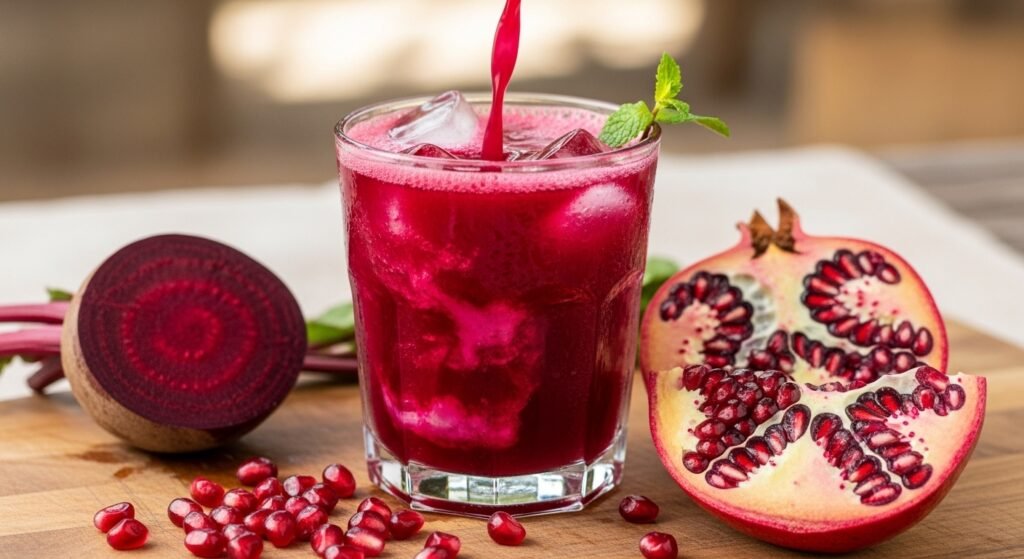
This deep crimson juice is arguably the most powerful tool for increasing blood flow to the brain. Beetroots are incredibly high in natural nitrates, which the body converts into nitric oxide. This relaxes the blood vessels and allows more oxygen to reach the brain.
- Key Ingredients: 1 medium beet, 1/2 cup pomegranate arils, 1 apple, 1-inch ginger.
- Why it supports focus: By enhancing circulation, it provides an immediate “lift” in mental clarity. Pomegranates add a layer of potent antioxidants that protect the brain from stress.
- Nutritional Explanation: The combination of betalains from the beet and polyphenols from the pomegranate creates a systemic anti-inflammatory effect.
- Best for: Morning preparation before a high-stakes meeting or exam.
- Recipe: Juice the beet and ginger first, then follow with the apple and pomegranate to flush the system. This juice for brain health is best served chilled.
2. Blueberry & Spinach Focus Blend
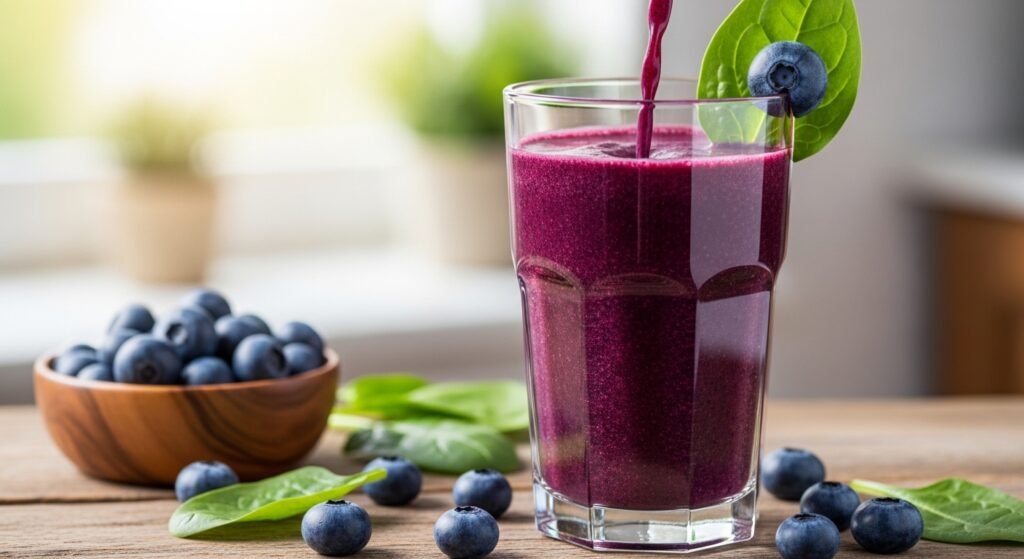
Blueberries are often called “brain berries” because of their high concentration of gallic acid and anthocyanins. When combined with the folate found in spinach, this juice becomes a powerhouse for memory support.
- Key Ingredients: 1 cup blueberries, 2 cups baby spinach, 1 cucumber, 1/2 lemon.
- Why it supports focus: It helps protect the brain from oxidative stress and has been linked in studies to improved short-term memory.
- Nutritional Explanation: Anthocyanins are known to cross the blood-brain barrier, providing direct protection to neurons.
- Best for: Students or professionals who need to retain large amounts of information.
- Recipe: Use the cucumber as the base to provide plenty of liquid, then alternate between spinach and blueberries. This is one of the most effective healthy juicing recipes for daily use.
3. Carrot, Ginger & Turmeric Clarity Juice
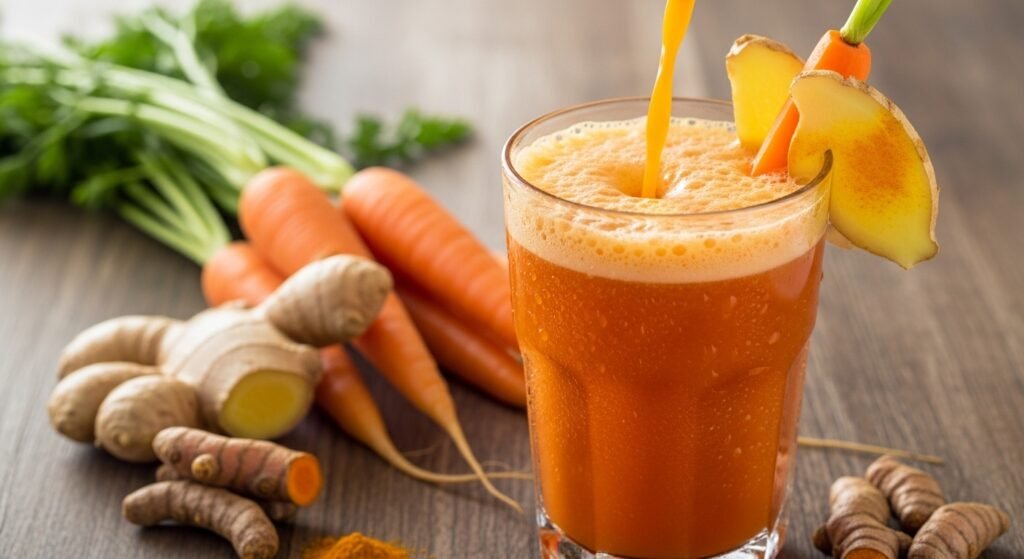
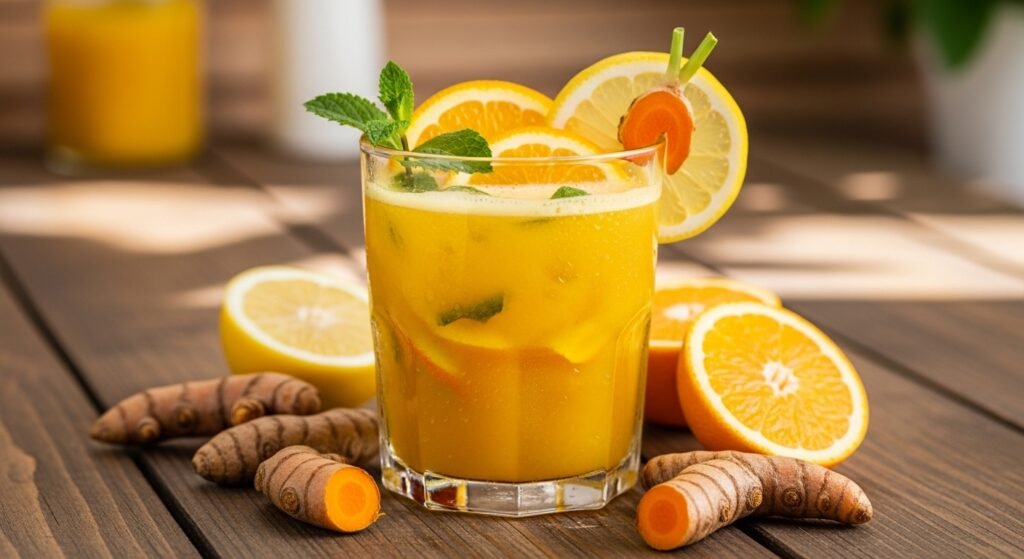
This bright orange juice is designed to fight “brain fog” caused by inflammation. Turmeric contains curcumin, which is a world-class anti-inflammatory agent, while carrots provide beta-carotene for overall neurological health.
- Key Ingredients: 4 carrots, 1-inch turmeric root, 1-inch ginger root, 1 orange.
- Why it supports focus: It reduces systemic inflammation, which is often the underlying cause of mental fatigue and “fuzzy” thinking.
- Nutritional Explanation: Curcumin supports the levels of BDNF (Brain-Derived Neurotrophic Factor), a type of growth hormone that functions in the brain.
- Best for: Afternoon energy resets when you feel your concentration slipping.
- Recipe: Ensure you juice the turmeric and ginger with the carrots to extract the maximum amount of oils. This juice for brain health has a spicy, warming kick.
4. Apple, Kale & Lemon Brain Cleanse
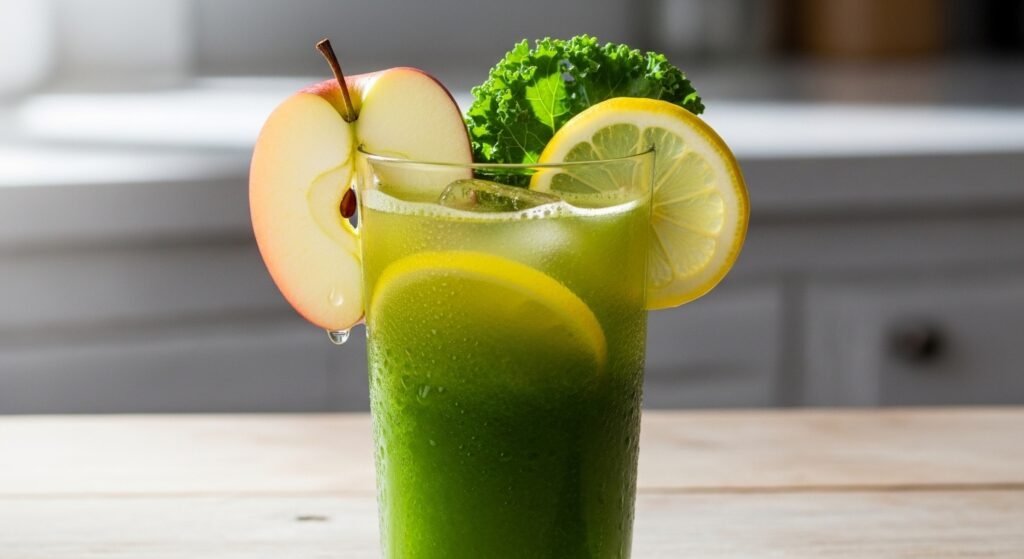
Kale is one of the most nutrient-dense foods on earth, providing a massive dose of Vitamin K, which is essential for the formation of sphingolipids—a type of fat that is densely packed into brain cells.
- Key Ingredients: 2 cups kale, 2 green apples, 1/2 lemon, 1 stalk celery.
- Why it supports focus: It provides the structural building blocks for healthy brain cells while the lemon provides a refreshing zest that wakes up the senses.
- Nutritional Explanation: High levels of Vitamin K have been associated with slower cognitive decline and better memory scores.
- Best for: A clean, light breakfast juice that won’t weigh you down.
- Recipe: Roll the kale leaves tightly before putting them through the juicer to get the most yield. This juice for brain health is crisp and invigorating.
5. Citrus Mint Hydration Refresher
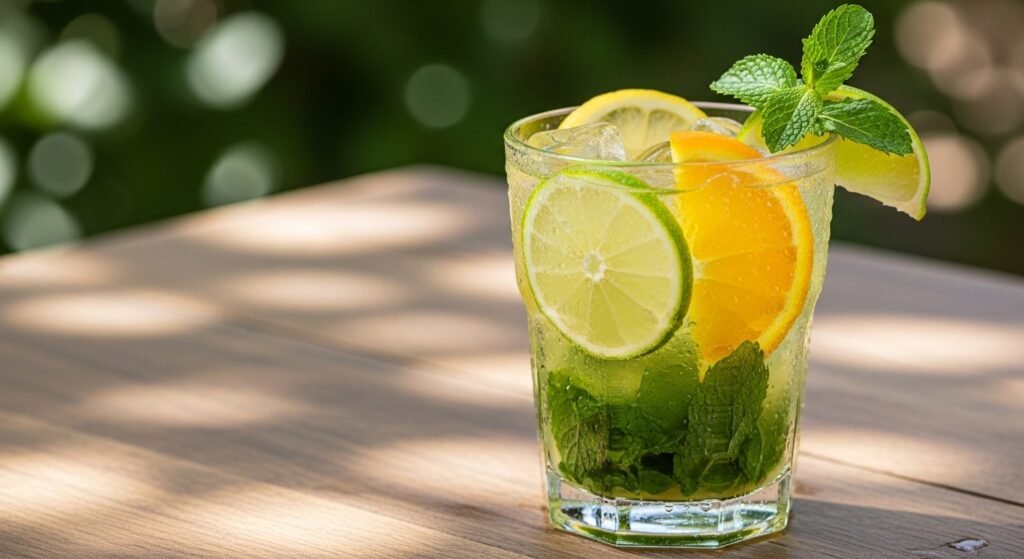
Hydration is the foundation of mental performance. This juice uses the cooling properties of mint and the high electrolyte content of citrus to keep your brain hydrated at a cellular level.
- Key Ingredients: 2 oranges, 1 lime, a handful of fresh mint, 1/2 cucumber.
- Why it supports focus: Essential oils in mint have been shown to improve alertness and decrease frustration during difficult tasks.
- Nutritional Explanation: The Vitamin C in citrus fruits is a powerful antioxidant that helps maintain the health of cerebral blood vessels.
- Best for: Hot summer days or long study sessions.
- Recipe: Muddle the mint slightly before juicing to release the oils. This is a great healthy juice for kids as well, due to its familiar lemonade-like flavor.
6. Cucumber & Celery Mind Cleanser
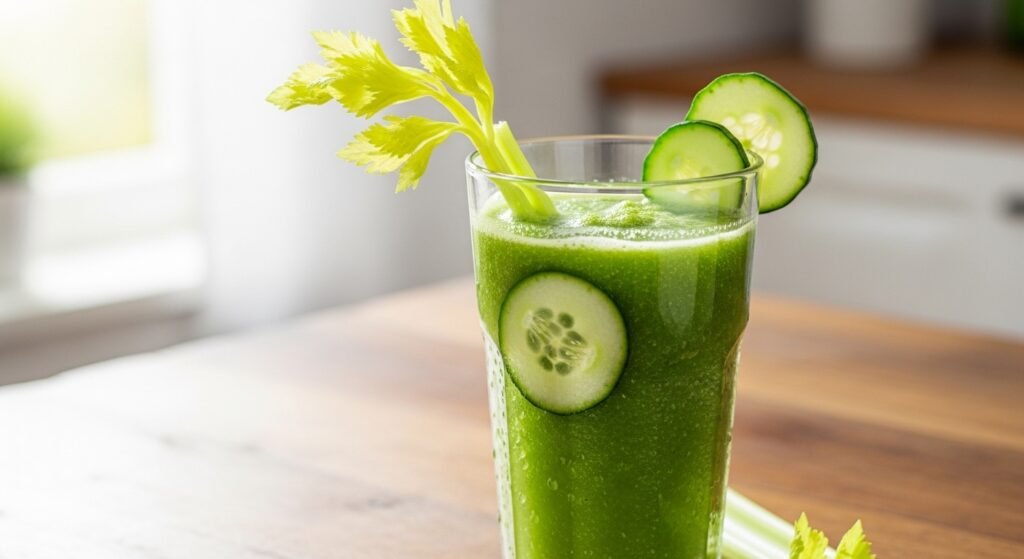
For those who want to keep their sugar intake to a minimum, this “green” juice is the ultimate choice. It is incredibly hydrating and rich in luteolin, a compound that can calm brain inflammation.
- Key Ingredients: 1 cucumber, 4 stalks celery, 1/2 lemon, a pinch of sea salt.
- Why it supports focus: It provides deep hydration and a steady stream of electrolytes without any glycemic spike.
- Nutritional Explanation: Luteolin has been shown in research to reduce age-related memory deficits by quieting the brain’s “alarm” cells.
- Best for: Those on keto or low-carb diets who still want a juice for brain health.
- Recipe: Juice the celery and cucumber together. The lemon and sea salt help to balance the “salty” mineral taste of the celery.
7. Green Detox Focus Juice
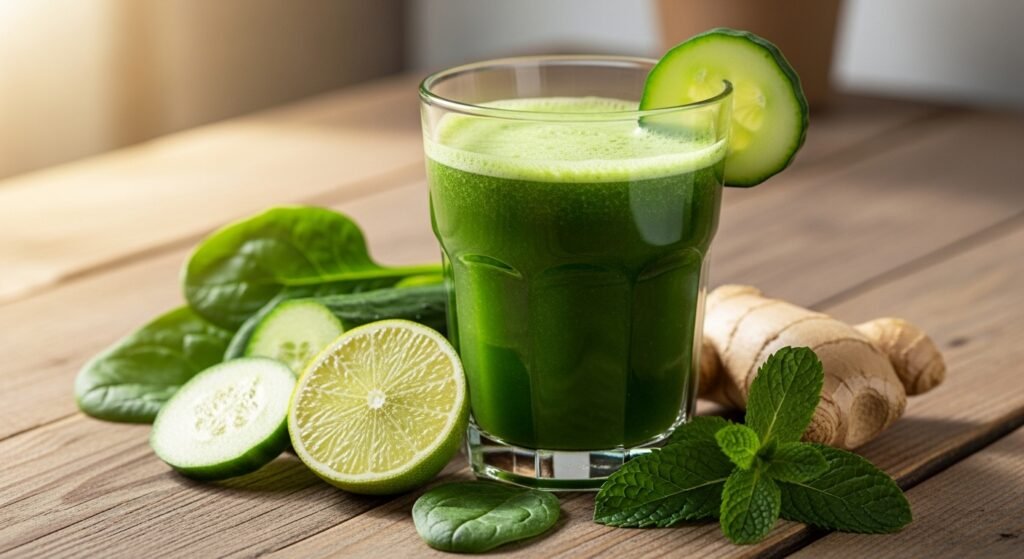
This recipe combines various “brain-boosting” greens into one potent tonic. Parsley and romaine lettuce are often overlooked but are rich in apigenin, which enhances neuron formation.
- Key Ingredients: 1 head romaine lettuce, a handful of parsley, 1 green apple, 1/2 cucumber.
- Why it supports focus: It provides a broad spectrum of minerals that support neural communication and electrical signaling in the brain.
- Nutritional Explanation: Apigenin is a flavonoid that may increase the production of neurons and strengthen the connections between them.
- Best for: People who enjoy the earthy, clean taste of a healthy green juice bar experience at home.
- Recipe: Feed the parsley through with the apple to help push the leafy bits through the juicer. This juice for brain health is a true tonic for the mind.
8. Pineapple & Turmeric Anti-Inflammatory Juice
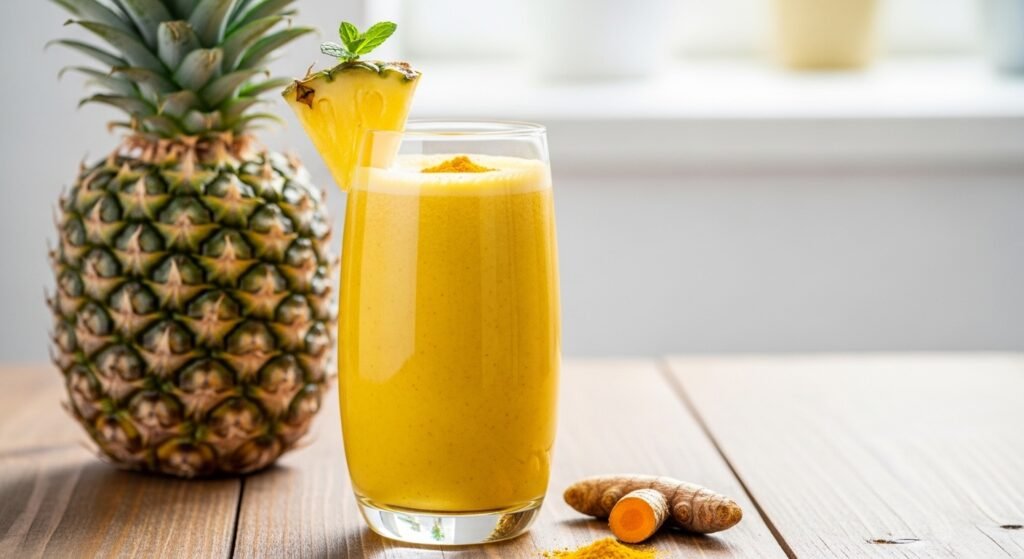
Pineapple adds a tropical sweetness while providing bromelain, an enzyme that works synergistically with turmeric to reduce inflammation throughout the body and brain.
- Key Ingredients: 1 cup pineapple, 1-inch turmeric, 1/2 lemon, 1 cucumber.
- Why it supports focus: By reducing inflammation, it clears the “noise” in your system, allowing you to focus on the task at hand.
- Nutritional Explanation: Bromelain helps increase the absorption of curcumin from the turmeric, making this a highly bioavailable blend.
- Best for: Recovery days or when you are feeling physically and mentally “sore.”
- Recipe: Juice the pineapple and turmeric together for the best flavor extraction. This is a very popular juice for brain health in 2026.
9. Berry Antioxidant Brain Blend
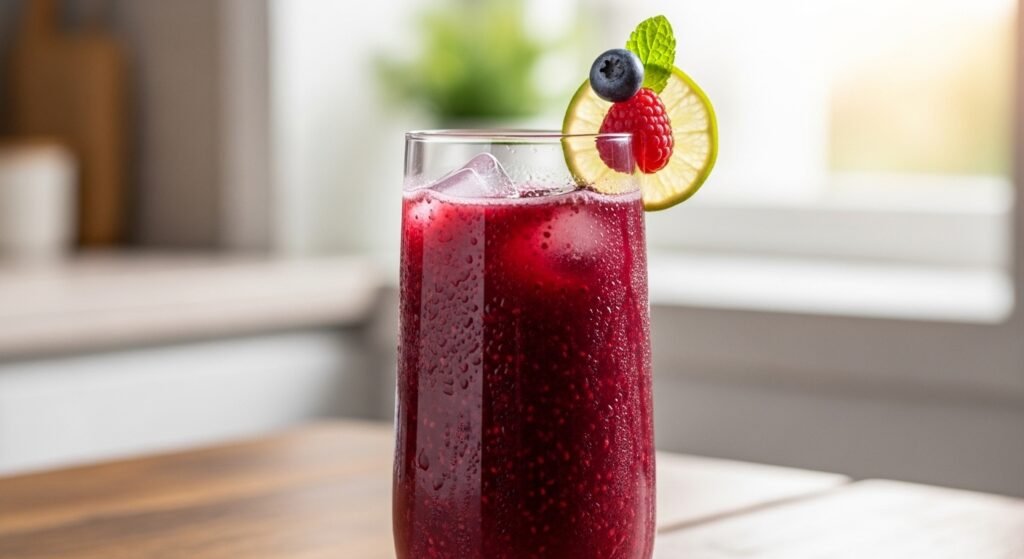
A mix of strawberries, raspberries, and blackberries provides a varied profile of antioxidants. Each berry offers a different type of protective polyphenol.
- Key Ingredients: 1 cup mixed berries, 1 apple, 1/2 lime, 1 stalk celery.
- Why it supports focus: The diverse range of antioxidants ensures that multiple pathways in the brain are protected from oxidative stress.
- Nutritional Explanation: Flavonoids in berries have been found to improve communication between brain cells and increase plasticitly.
- Best for: A delicious, antioxidant-heavy snack that feels like a treat.
- Recipe: Berries can be low-yield, so using an apple as a base helps “wash” the berry juice through the machine. This is one of the best healthy juicing recipes for a sweet tooth.
10. Watermelon & Lime Hydration Juice
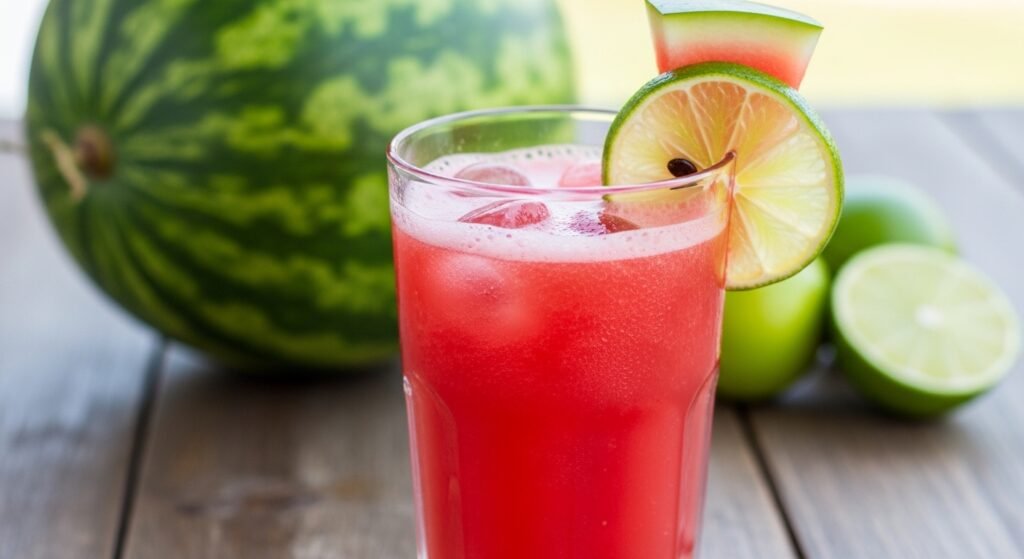
Watermelon is 92% water and contains L-citrulline, an amino acid that helps improve blood flow and reduce muscle soreness, which in turn reduces mental distraction from physical discomfort.
- Key Ingredients: 2 cups watermelon (including some white rind), 1 lime, a handful of basil.
- Why it supports focus: It offers immediate rehydration and the basil provides a subtle aromatic effect that can help center the mind.
- Nutritional Explanation: Lycopene in watermelon is a powerful fat-soluble antioxidant that protects the fatty tissues of the brain.
- Best for: Rehydrating after a workout or a long walk to get the brain back into “work mode.”
- Recipe: Juice the watermelon and basil together. Including the white part of the rind increases the L-citrulline content of your juice for brain health.
Juicing vs Smoothies for Brain Performance
In the wellness world, the debate between juicing for brain health and blending smoothies is ongoing. The primary difference is fiber.
Juicing removes the insoluble fiber, which means the nutrients hit your bloodstream almost instantly.
For mental performance, this can be an advantage when you need a quick “reboot.” The lack of fiber means your digestive system doesn’t have to work as hard, leaving more energy available for your brain.
Smoothies, however, provide a slower release of energy. Because the fiber is intact, the fruit sugars are absorbed more gradually. If you are looking for a meal replacement that will keep you full and focused for four hours, a smoothie is the better choice.
But if you have just finished a meal and want a concentrated “shot” of brain-boosting nutrients, a juice for brain health is superior.
Many high-performers in 2026 use a hybrid approach. They might start the day with a fiber-rich smoothie and use a fresh juice in the afternoon to sharpen their focus for a final push of work.
Regardless of which you choose, the quality of the ingredients is the most important factor. Always prioritize fresh, organic produce to avoid introducing pesticides into your system, which can actually impair cognitive function.
Juicing for Brain Health: Daily Routine Tips
Integrating these juices into your life requires more than just a juicer; it requires a strategy. To get the best results from your juice for brain health, timing is everything.
Drinking a green juice first thing in the morning on an empty stomach allows the minerals to be absorbed without competition from other foods. This sets a “baseline” of hydration and nutrition for the rest of the day.
If you find yourself hitting a wall at 2:00 PM, an afternoon energy reset juice is a game-changer. Instead of reaching for a sugary snack, a carrot and ginger blend can stimulate your metabolism and clear away the mid-day fog.
For those who work late into the evening, a pre-work focus drink—like the beetroot and pomegranate blend—can provide the oxygen boost your brain needs to stay sharp during the “second shift.”
Consistency is the final piece of the puzzle. You won’t see a permanent increase in memory or focus from a single glass of juice. However, after 14 to 21 days of daily juicing for brain health, many people report a significant improvement in their “mental endurance.” They find they can work for longer periods without getting distracted and feel less exhausted at the end of the day.
Can Kids Benefit from Brain-Boosting Juices?
Parents often ask if these recipes are appropriate for children. The answer is yes, but with a few caveats. A healthy juice for kids should be even lower in sugar than an adult version.
Children are more sensitive to glycemic spikes, which can lead to hyperactivity followed by a focus-killing crash. Focus on juices that use “watery” vegetables like cucumber or romaine as the base.
Moderation is also key for kids. A small 4-ounce serving is usually enough to provide a nutritional boost without overwhelming their small systems. Including children in the process of making the juice can also encourage them to develop an interest in nutrition.
Let them pick between “The Green Dragon” (kale juice) or “The Red Rocket” (beet juice) to make the experience fun and educational.
Avoid making any exaggerated promises to your children about “getting smarter” from juice. Instead, frame it as “brain fuel” that helps them play better, focus on their hobbies, and have more energy for their friends.
Developing a taste for healthy juicing recipes early in life sets a foundation for wellness that will benefit them well into adulthood.
Common Mistakes When Making Brain Juices
The biggest mistake beginners make is using too much fruit. If your juice for brain health contains four oranges and two apples, you are essentially drinking a large dose of liquid sugar.
While natural, this can still cause inflammation and brain fog. Aim for a vegetable-to-fruit ratio that keeps the juice “savory” rather than “syrupy.”
Another mistake is neglecting the quality of your produce. Since juicing concentrates everything in the plant—including any chemical residues—using non-organic produce can be counterproductive for brain health.
If you are on a budget, prioritize organic versions of the “Dirty Dozen” (like kale, spinach, and apples) and use conventional versions of thick-skinned items like pineapples or oranges.
Finally, don’t expect instant miracles. A juice for brain health is a tool, not a magic potion. If you are drinking green juice but only getting five hours of sleep and eating processed foods for dinner, your results will be limited. Juicing works best as part of a holistic lifestyle that includes proper sleep, regular movement, and mental rest.
FAQ
What is the best juice for brain health?
While all the juices on this list are beneficial, the Beetroot & Pomegranate blend is often considered the best for immediate focus due to its high nitrate content and blood-flow support.
Do juices really improve focus?
Yes, by providing concentrated antioxidants, nitrates, and electrolytes, a high-quality juice for brain health can support the physiological conditions necessary for deep concentration and mental clarity.
Is juicing safe daily?
For most healthy adults, daily juicing is safe and beneficial. However, it is important to rotate your ingredients to avoid a buildup of specific compounds like oxalates and to ensure a wide variety of nutrients.
Can juice help with memory?
Ingredients like blueberries, spinach, and kale are rich in compounds that have been linked in clinical studies to improved memory retention and slower rates of cognitive decline.
Are brain juices good for students?
Absolutely. Students often experience high levels of mental stress and “brain drain.” A healthy juice for kids or students can provide a clean energy source for long study sessions without the caffeine jitters.
Does juicing remove all the fiber?
Juicing removes the insoluble fiber but retains much of the soluble fiber. This allows for faster nutrient absorption while still providing some of the benefits of fiber.
Can I store my brain juice for later?
For maximum benefit, drink your juice immediately. If you must store it, use an airtight glass container and keep it in the fridge for no more than 24 hours.
Is it better to juice or eat the whole fruit?
Both have benefits. Eating whole fruit provides more fiber, but a juice for brain health provides a more concentrated and rapidly absorbed dose of micronutrients.
Disclaimer
The information provided in this article is for educational and informational purposes only and is not intended as medical advice. While fresh juices are a healthy addition to most diets, they are not a substitute for professional medical diagnosis or treatment.
Always consult with a qualified healthcare provider before making significant changes to your diet, especially if you have underlying health conditions, are pregnant, or are taking medication. Never disregard professional medical advice or delay seeking it because of something you have read here.
Conclusion
Reclaiming your mental clarity in 2026 requires a proactive approach to nutrition. We can no longer afford to treat our brains as an afterthought. By making a conscious choice to include a juice for brain health in your daily routine, you are investing in your most valuable asset: your mind.
The combination of hydration, antioxidant protection, and improved blood flow creates a powerful synergy that can help you navigate the complexities of modern life with ease.
Don’t feel like you have to try all ten recipes at once. Start with the one that sounds most appealing to you—perhaps a refreshing Citrus Mint or a sweet Blueberry Spinach blend.
Observe how your body and mind feel in the hours following your juice. Most people notice a subtle but distinct shift in their ability to stay on task and a reduction in that “heavy” feeling in their head by mid-afternoon.
Ultimately, the goal is to build a lifestyle that supports your long-term cognitive health. Fresh juice is a vibrant, delicious, and highly effective part of that journey. As you explore the world of juicing for brain health, stay curious and stay consistent. Your brain works hard for you every single day; it’s time to give it the premium fuel it deserves. Cheers to your focus, your clarity, and your bright mental future!
Share Your Juice Experience
There are no reviews yet. Be the first one to write one.