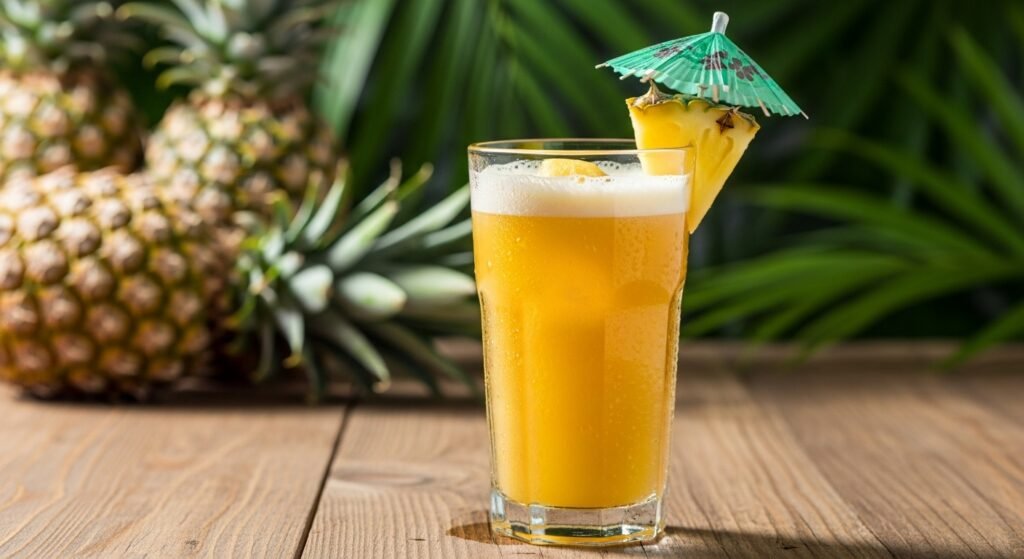
Pineapple juice: a sweet, tangy treat with a host of benefits. It’s also a great way to enjoy the fruit’s natural goodness. Pineapples, with their spiky crowns and golden flesh, are instantly associated with warm, sunny places and a certain zest for life. Beyond its prickly skin and the delightful, zesty flesh, there’s a hidden gem: pineapple juice.
This drink is more than just a cool, fruity treat; it’s a nutritional dynamo, packed with vitamins, minerals, and, perhaps most importantly, the potent enzyme bromelain.
This comprehensive, expert-reviewed guide explores every aspect of this golden liquid. Let’s dive into the remarkable health benefits of pineapple juice. We’ll also dissect its nutritional makeup, weigh the pros and cons of fresh versus store-bought varieties such as Dole pineapple juice, and finally, I’ll share a detailed, easy-to-follow recipe for making the freshest pineapple juice, right at home.
Whether you’re intrigued by its potential to reduce inflammation or just seeking a fresh health kick, it’s time to explore why pineapple juice should become a staple in your daily routine.
What Exactly Is Pineapple Juice?

Pineapple juice, at its essence, is the liquid that comes from the fruit’s meaty insides, the Ananas comosus. Renowned for its vibrant yellow color and a flavor that’s both sweet and tangy, pineapple juice is a worldwide sensation, enjoyed in settings ranging from casual beach bars to upscale restaurants.
The Two Types of Pineapple Juice
Knowing what’s inside is key, because “pineapple juice” can mean two different things.
- Fresh, Homemade Pineapple Juice: This is the purest version, usually made from just the fruit’s pulp and its own juices, either strained or blended. This recipe preserves the most of the fruit’s inherent fiber, vitamins, and active enzymes. This is the pinnacle of “pineapple juice pineapple” experiences.
- Commercial or Canned Pineapple Juice: The kind you see on supermarket shelves is usually pasteurized, filtered, and occasionally derived from concentrate. To maintain consistency and extend shelf life, these products generally include additional water, preservatives, and even sweeteners. Though still enjoyable, they often contain fewer heat-sensitive nutrients and enzymes than their fresh counterparts.
Pineapple’s adaptability makes it a natural fit with juice, finding its way into countless recipes, from marinades and cocktails to baked goods and, naturally, enjoyed on its own.
Is Pineapple Juice Beneficial for Your Health?
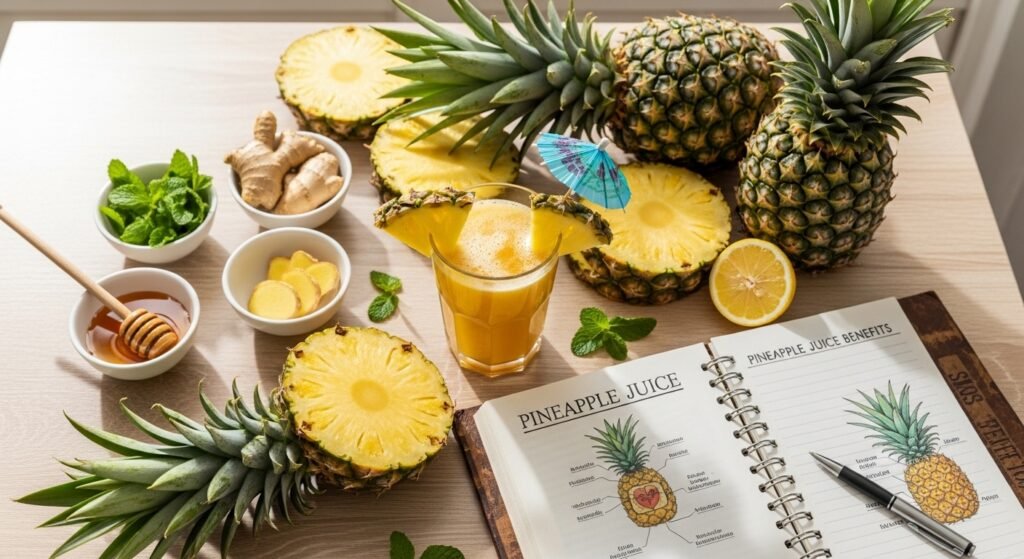
The quick answer to the question, “is pineapple juice good for health?” is a definite yes. Fresh, unsweetened pineapple juice packs a powerful punch of nutrients, many of which contribute to various biological processes. Its stellar reputation stems from its unique combination of abundant Vitamin C and the presence of the enzyme complex, bromelain.
Nutritional Snapshot of Pure, Unsweetened Pineapple Juice
The following data represents the approximate nutrient profile for a standard 1-cup (240ml) serving of 100% pure, unsweetened pineapple juice:
| Nutrient | Amount (Approximate) | Contribution to Daily Value (DV) | Primary Health Function |
| Calories | 133 kcal | — | Energy source |
| Total Carbohydrates | 33 g | 12% | Energy, fiber, natural sugars |
| Dietary Fiber | 0.5 g | 2% | Digestive support (lower than whole fruit) |
| Total Sugars | 25 g | — | Natural fructose and glucose |
| Protein | 1 g | 2% | Minimal source |
| Vitamin C (Ascorbic Acid) | 79 mg | 88% | Immune defense, antioxidant, collagen synthesis |
| Manganese | 1.6 mg | 78% | Bone health, metabolism, antioxidant defense |
| Vitamin B6 (Pyridoxine) | 0.2 mg | 12% | Brain function, red blood cell formation |
| Thiamin (B1) | 0.1 mg | 10% | Energy metabolism |
| Potassium | 290 mg | 6% | Blood pressure regulation, fluid balance |
| Copper | 0.2 mg | 10% | Energy production, iron absorption |
| Folate (B9) | 30 mcg | 8% | Cell growth and division |
Source: USDA FoodData Central (values approximated for 100% juice, variation is expected based on ripeness and variety).
The Health Benefits: The Bromelain and Vitamin C Advantage
The comprehensive array of vitamins and minerals answers the query, “is pineapple juice good for health,” by showcasing its ability to provide essential micronutrients. However, the advantages are significantly enhanced by its active components: Bromelain and Vitamin C.
1. Anti-Inflammatory and Pain Relief Properties (Bromelain)
Bromelain, a group of enzymes that break down proteins (proteolytic), is mostly present in the stem and juice of pineapples. Bromelain’s health advantages are widely investigated, particularly its capacity to reduce inflammation and edema.
Regarding musculoskeletal relief, Bromelain demonstrates potential in diminishing pain and swelling linked to sports-related injuries, contusions, and persistent ailments such as osteoarthritis.
Furthermore, research indicates that Bromelain may aid in lessening inflammation within the nasal passages and sinuses, thereby potentially alleviating the manifestations of asthma and sinusitis.
2. Enhanced Digestive Function
Bromelain, a proteolytic enzyme, facilitates the breakdown of intricate proteins into more readily absorbable amino acids. Regarding protein digestion, the consumption of pineapple juice, either concurrently with or immediately following a protein-rich meal, can substantially enhance the efficacy of protein digestion.
Furthermore, the juice provides modest quantities of natural dietary fiber and water, thereby contributing to regularity and fostering a conducive environment for beneficial gut bacteria.
3. Immune System Fortification
Pineapple juice serves as a prime fruit-derived source of Vitamin C, a potent antioxidant crucial for maintaining a robust immune system. Vitamin C stimulates the generation of white blood cells, specifically lymphocytes and phagocytes, which are indispensable for the body’s defense against infectious agents.
Furthermore, the antioxidants present, such as Vitamin C and diverse polyphenols, combat free radicals, thereby mitigating cellular harm, facilitating cellular repair, and promoting swift recuperation from illness.
4. Boosting Energy and Metabolism
The presence of natural sugars, specifically glucose and fructose, furnishes a readily available energy source. Simultaneously, the significant levels of Manganese and Thiamin (B1) are essential for the body’s metabolic functions.
Manganese, in particular, is indispensable for activating enzymes that facilitate energy production and carbohydrate metabolism. A single serving of pineapple juice provides a substantial amount of the manganese your body need each day.
5. Supports Cardiovascular Health
The significant potassium concentration in pineapple juice serves as an electrolyte, essential for counteracting elevated sodium levels within the body, a factor critical for blood pressure management.
- Blood Pressure Regulation: Potassium functions as a vasodilator, facilitating the relaxation of blood vessel walls, thereby alleviating arterial tension and diminishing the overall strain on the heart.
- Circulation: Furthermore, bromelain may exhibit anti-coagulant characteristics, potentially aiding in the prevention of excessive blood clot formation and promoting healthy circulation.
Pineapple Juice and Wisdom Teeth Recovery

A frequently posed and specific inquiry pertains to the role of pineapple juice in the recovery process following wisdom teeth extraction. This is where Bromelain’s medicinal benefits truly come to the fore.
Does Pineapple Juice Actually Help With Swelling?
- Targeting Edema (Swelling): The bromelain works by breaking down fibrin, a protein that can cause fluid to accumulate in tissues, thus helping to reduce post-operative edema. Swelling around the cheeks and jaw is a common consequence of having wisdom teeth pulled, and drinking pineapple juice before and after the surgery might help lessen it.
- Pain Relief: Bromelain, the enzyme in pineapple, can also ease the pain by cutting down on inflammation, which can make the healing process a bit easier.
Dosage and Best Practices
As for how much to drink, there’s no hard and fast rule, but many oral surgeons recommend patients start drinking pineapple juice two or three days before the operation and keep it up for three to five days afterward.
- Focus on Fresh Juice: For the best results, opt for freshly pressed pineapple juice or a juice product that clearly states it contains active Bromelain. Heat pasteurization can destroy the enzyme, so be careful.
- Caution: Always check with your oral surgeon or dentist before introducing any new supplement or altering your diet before or after surgery. Pineapple juice shouldn’t be seen as a replacement for any meds your doctor has prescribed; it’s more of a helpful addition.
Fresh Pineapple Juice versus Dole Pineapple Juice: A Key Comparison
When pineapple juice is on the table, Dole pineapple juice often serves as the standard for what’s available commercially. While both offer convenience and a certain level of quality, the nutritional and enzymatic advantages differ significantly.
Let’s compare homemade pineapple juice with commercially available options, like Dole’s 100% juice.
| Feature | Fresh, Homemade Pineapple Juice | Commercial Dole Pineapple Juice (100% Juice) |
| Enzyme Content (Bromelain) | High and fully active. The enzyme’s activity is reduced by heat, thus it’s best to use it immediately after pressing. | The enzyme’s effectiveness is greatly diminished, or even eliminated, by heat. Commercial juices typically undergo pasteurization, which inactivates the Bromelain enzyme. |
| Flavor Profile | The taste is bright, lively, and intricate, including a sharp, natural acidity that perfectly complements the sweetness. Pineapple flavor shifts depending on the type and how ripe it is. | The sweetness is even and reliable, thanks to mixing and standardization. Frequently, it misses the intricate, novel quality. |
| Fiber Content | Fiber content varies, offering a reasonable quantity of both soluble and insoluble fiber, contingent on how it’s strained. | It’s usually minimal or nonexistent. Most of the fiber is removed by extensive filtration. |
| Ingredients | 100% pineapple juice pineapple, with optional water and citrus. No additives. | Pure juice, made from concentrated pineapple juice and water. Ascorbic acid, or Vitamin C, is frequently included to boost nutritional content. |
| Shelf Life | Very short (2-3 days refrigerated) due to lack of preservatives. | Long (months to years) due to pasteurization and airtight canning/bottling. |
Why Fresh is Superior for Specific Health Goals
If you’re aiming to harness the anti-inflammatory benefits—perhaps for post-wisdom teeth extraction or joint pain—fresh, raw pineapple juice is the only way to guarantee you’re getting active Bromelain. For those seeking vitamins, minerals, and a pleasant flavor, Dole pineapple juice is still a solid, easy option for Vitamin C and Manganese.
How to Make Pineapple Juice at Home: Extracting the Purest Pineapple Juice

Making pineapple juice wisdom teeth at home is surprisingly simple, and it gives you control over the consistency, sweetness, and ensures you keep all the active enzymes and nutrients. This is the ultimate “pineapple and juice” combination.
Best Pineapple Varieties for Juicing
The pineapple you select will significantly influence the taste and consistency of your juice.
- MD-2 (Gold or Extra Sweet): This is the reigning champ. It’s the most commonly found variety, celebrated for its vibrant golden hue, mild acidity, and remarkable sweetness. It produces a juice that’s quite sweet, almost syrupy.
- Smooth Cayenne: The go-to pineapple, frequently seen in canned products. The juice’s acidity gives it a tart, invigorating quality, which is particularly enjoyable when blended with other fruits or used in cocktails.
- Sugarloaf: A less frequently seen type, boasts a delicate, creamy texture and a pronounced sweetness. It produces a rich, milky pineapple juice.
Necessary Equipment
To make the best pineapple juice wisdom teeth at home, you will need one of the following:
- For Smooth, High-Yield Juice: A dedicated juicer (slow press or centrifugal).
- For Thick, Pulpier Juice/Smoothie Consistency (Recommended): A high-speed blender or food processor.
- A fine-mesh sieve or nut milk bag (essential for removing pulp if you prefer a thin juice).
- A sharp chef’s knife and cutting board.
Step-by-Step Pineapple Juice Recipe
This method, utilizing a blender, results in a naturally thick, sweet, and revitalizing glass of pineapple juice.
Prep Time: 15 minutes
Yields: 4 servings (approx. 1 liter)
Ingredients:
- 1 large, ripe pineapple (MD-2 or Smooth Cayenne recommended)
- 1/2 cup (120ml) filtered water or coconut water (optional; adjust for preferred thickness)
- 1/2 teaspoon fresh ginger (optional; for a spicy kick and extra digestive support)
- 1 tablespoon fresh lime juice (optional; balances sweetness and adds brightness)
Instructions:
- Preparation (The Pineapple):
- Wash the exterior of the pineapple thoroughly.
- Carefully use a sharp knife to slice off the crown (top) and the base (bottom).
- Stand the pineapple upright and slice off the outer skin in strips, following the curvature of the fruit.
- Cut the pineapple into four big pieces. Remove the tough, fibrous core; it’s where the most Bromelain is found, but it can make the juice gritty. If you’re using a powerful blender and want the full enzymatic benefit, you could leave it in.
- Cut the remaining pineapple into one-inch cubes.
- Now, for the blending:
- Put all the chopped pineapple pieces into your high-speed blender.
- Add the optional water (or coconut water), lime juice, and ginger. Begin with the least amount of liquid, around half a cup; you can always adjust afterward.
- First, blend:
- Secure the lid and start on medium speed, then ramp it up to high. Blend the mixture until it’s completely smooth, with no major lumps left (this normally takes around 60 to 90 seconds). The aim is a smooth, homogeneous liquid.
- Evaluate the texture and flavor.
- If you want your pineapple juice wisdom teeth on the thinner side, just keep the blender going and slowly add the rest of the water until it reaches the consistency you want.
- Give it a taste. If the pineapple’s a bit too sharp, a teaspoon of honey or maple syrup should do the trick.
- Straining (for a crystal-clear juice):
- Want to eliminate the pulp? Pour the mixture through a fine-mesh sieve or a nut milk bag, held over a bowl or pitcher. Employ a spatula or the spoon’s back to compress the residual pulp, therefore ensuring complete liquid extraction. Discard the pulp, or preserve it for later use in baking or smoothies.
- Serving and Storage:
- Pour the fresh pineapple juice wisdom teeth over ice and serve right away. Add a lime wedge or a mint sprig for a finishing touch.
- Any remaining juice should be kept in a clean, airtight container in the fridge, where it will stay fresh for three days.
Potential Side Effects and Caution
Though pineapple juice offers advantages, it’s wise to consume it in moderation, and some people should be particularly careful.
- High Natural Sugar Content: Consider the high natural sugar content: a single cup of pineapple juice wisdom teeth has roughly 25 grams of sugar. Even while it’s better than the added sugars found in Dole pineapple juice wisdom teeth and similar drinks, this high level of sugar can cause a quick rise in blood sugar. People with diabetes should talk to their doctor about how much pineapple is safe to eat.
- Acidity and Erosion: Pineapple is acidic, which can cause erosion. Consuming too much can lead to the wearing away of dental enamel and may cause heartburn or increase symptoms of acid reflux. Always swish some water around your mouth after you drink.
- Bromelain Sensitivity: Bromelain sensitivity is something to consider. Some people can find themselves with a little of a stomachache, maybe even diarrhea or nausea, after consuming fresh juice because of the bromelain. Allergic reactions, such as hives or itching, are also possible. If you’re allergic to pollen, celery, or carrots, you might also react to pineapple due to cross-sensitivity.
FAQ
Q: Is pineapple juice good for health, and what are its main benefits?
A: Indeed, pineapple juice offers a wealth of health advantages. Its key advantages stem from Bromelain, an enzyme known for its potent anti-inflammatory properties. Additionally, the juice provides strong immune support, thanks to its significant Vitamin C levels. Furthermore, the proteolytic enzymes in pineapple juice wisdom teeth assist with digestion by breaking down proteins.
Q: Is it safe to consume pineapple juice daily?
A: For most healthy adults, a daily cup of pure, unsweetened pineapple juice wisdom teeth is usually okay. Because of its naturally high sugar levels, it’s best to have it alongside a diet that’s low in sugar. Also, it shouldn’t be your primary source of hydration; stick with water for that.
Q: Does Dole pineapple juice include Bromelain?
A: Commercial juices, such as Dole pineapple juice, are typically pasteurized. This heating process is done to extend the product’s shelf life. Because bromelain is an enzyme that is sensitive to heat, pasteurization usually inactivates it. To reap the full rewards of bromelain, fresh, unpasteurized pineapple juice wisdom teeth is key.
Q: What role does pineapple juice play in recovery after wisdom teeth are taken out?
A: Pineapple juice can help with healing after wisdom teeth removal since it contains bromelain, an enzyme known for its strong anti-inflammatory qualities. Bromelain can help reduce swelling (edema) and the associated pain in the jaw and cheek areas after surgery. It’s most effective when taken for several days, both before and after a surgical procedure, as advised by a dentist.
Q: When is the ideal time to drink pineapple juice?
A: The best time to enjoy pineapple juice wisdom teeth is either in the morning, to use its natural sugars for energy, or right before or after a meal, when the Bromelain can help digest proteins.
Q: What’s the difference between “pineapple juice” and “pineapple and juice” in recipes?
A: Pineapple juice is simply the liquid that’s been extracted from the fruit. The term “pineapple and juice” frequently appears in culinary instructions, denoting the fruit’s solid segments and the liquid extracted from them during preparation. This phrasing underscores the importance of both the fruit’s physical form and its juiced state in the creation of a particular recipe or beverage.
Q: How much pineapple is needed to make one liter of juice?
A: A liter of pure pineapple juice, roughly four cups, usually demands the pulp of one and a half to two medium, ripe pineapples. This varies based on how you juice it and how ripe the fruit is.
Conclusion: The Allure of Fresh Pineapple Juice
Pineapple juice is, without a doubt, the “liquid gold” of the tropics. Recognizing the difference between store-bought choices, such as Dole pineapple juice, and the power of a freshly prepared drink brimming with enzymes allows you to get the most out of it. The health benefits of pineapple juice wisdom teeth are hard to ignore.
It’s especially good for your immune system, digestion, and even offers targeted help with inflammation. This includes things like recovery after wisdom teeth removal.
We suggest you try the easy recipe to enjoy the freshest, most intense flavor of pineapple juice, straight from the source.
Crafting your own “pineapple and juice” at home is the surest method to capture the complete array of vitamins, minerals, and the powerful Bromelain enzyme. This transforms the drink from a mere thirst-quencher into a key component of your overall well-being.
Share Your Juice Experience
Fresh, Informative, and Very Helpful
This article does a great job explaining the nutritional value of fresh pineapple juice without making it complicated. I especially liked the preparation tips, which helped keep the juice fresh and flavorful. After adding this juice to my routine, I felt more energized and refreshed.
Easy Recipes with Real Benefits
I’ve made pineapple juice before, but this guide showed me small changes that make a big difference. The nutrition breakdown was clear, and the wellness benefits were explained in a realistic way. It’s now my go-to reference when making fresh pineapple juice.
Refreshing, Nutritious, and Well Explained
This article helped me appreciate fresh pineapple juice even more. The preparation steps were easy to follow, and the nutrition section made it clear why this juice is so beneficial. I like that it focuses on fresh ingredients and natural flavor.