In 2026, the global shift toward functional nutrition has reached a fever pitch. We are no longer just eating for calories; we are eating for performance, longevity, and biological optimization.
Among the most potent tools in the modern wellness kit is spinach juice. Whether you are an endurance athlete, a busy professional, or someone looking to revitalize their blood health, understanding the role of plant-based iron is essential.
Iron is the silent engine of the human body. It is the primary component of hemoglobin, the protein in red blood cells that carries oxygen from your lungs to your tissues. Without adequate iron, your strength falters, your stamina evaporates, and your cognitive clarity dims.
While synthetic supplements exist, the trend in 2026 favors bioavailable, whole-food sources that provide a spectrum of co-factors for better absorption.
Green leafy vegetables have always been a staple of healthy diets, but the concentrated nature of spinach juice offers a unique advantage. It allows you to consume a massive volume of micronutrients without the digestive load of several cups of raw fiber.
This makes it an ideal “natural energy drink” for those who need a quick, nutrient-dense boost before a workout or a demanding day.
As we explore the best combinations for flavor and function, remember that the goal is synergy. We aren’t just looking for iron; we are looking for the Vitamin C, folate, and antioxidants that help that iron do its job. Let’s dive into why this emerald elixir is the gold standard for strength and vitality.
Why Spinach Is Powerful for Iron & Strength
Spinach is often called a “superfood,” but in the context of blood health, it is specifically a “blood builder.” The nutritional profile of this plant is perfectly suited for those looking to improve their circulation and physical resilience.
It contains non-heme iron, which is the form of iron found in plants. While non-heme iron is sometimes harder to absorb than heme iron (from animal sources), spinach comes packed with its own “helper” nutrients.
One of the most critical factors in strength is oxygen delivery. Every time you lift a weight or climb a flight of stairs, your muscles demand oxygen.
The iron found in a regular serving of spinach juice supports the production of healthy red blood cells. Furthermore, spinach is a rich source of natural nitrates.
These nitrates help relax the blood vessels, improving circulation and reducing the amount of oxygen your heart needs during exercise.
Beyond iron, spinach is loaded with Vitamin K, which is essential for bone health. Strong muscles are only as effective as the skeletal frame that supports them. It also provides a significant dose of magnesium.
Magnesium is a mineral that plays a role in over 300 biochemical reactions in the body, including muscle contraction and energy production.
Finally, we must consider the synergy of Vitamin C. Spinach contains Vitamin C naturally, but when we juice it with citrus or other fruits, we create a chemical environment that significantly boosts the absorption of plant-based iron. This makes spinach juice far more effective than eating a plain salad when it comes to immediate nutrient uptake.
Can You Juice Spinach?
When people first start their wellness journey, they often ask: can you juice spinach? The answer is a resounding yes, and in many ways, it is the most efficient way to consume this powerhouse leaf. While blending spinach into a smoothie is popular, juicing removes the insoluble fiber, allowing the vitamins and minerals to enter your bloodstream more rapidly.
Is it safe to juice spinach? Absolutely. However, balance is key. Spinach contains oxalates, which can be a concern for individuals prone to certain types of kidney stones.
For the average healthy adult, drinking spinach juice as part of a varied diet is not only safe but highly beneficial. The taste profile is surprisingly mild—it is slightly earthy and “green” but lacks the intense bitterness found in kale or dandelion greens.
If you are wondering about the best way to handle the leaves, always opt for fresh, organic baby spinach if possible. Baby spinach has a sweeter, more delicate profile that pairs beautifully with fruits. Whether you use a centrifugal juicer or a cold-press masticating juicer, you will find that spinach yields a vibrant, dark green liquid that serves as the perfect base for dozens of recipes.
Benefits of Spinach Juice for Energy & Blood Health
The benefits of drinking spinach juice extend far beyond a simple iron boost. One of the most immediate effects reported by regular drinkers is a sense of “clean” energy. Unlike the jittery spike provided by caffeine, the energy from green juice comes from cellular nourishment. By flooding the body with chlorophyll and minerals, you are supporting the mitochondria—the powerhouses of your cells.
Circulation support is another major advantage. The natural nitrates in spinach act as vasodilators. This means they help “open up” your veins and arteries. Improved blood flow means better nutrient delivery to your skin, brain, and muscles. This is why many athletes use a spinach juice recipe as a pre-workout tonic to enhance their “pump” and endurance.
Antioxidant protection is the third pillar of these benefits. Spinach is rich in lutein and zeaxanthin. While these are famous for eye health, they also act as systemic antioxidants, reducing oxidative stress throughout the body. When you are training hard or working in a high-stress environment, your body produces free radicals. The phytonutrients in spinach juice help neutralize these, preventing premature cellular aging.
Lastly, hydration is often overlooked. Juicing provides structured water from the plant cells themselves. This water is packed with electrolytes like potassium and sodium. Drinking your nutrients ensures that you are staying hydrated at a cellular level, which is the true secret to maintaining high energy levels throughout the day.
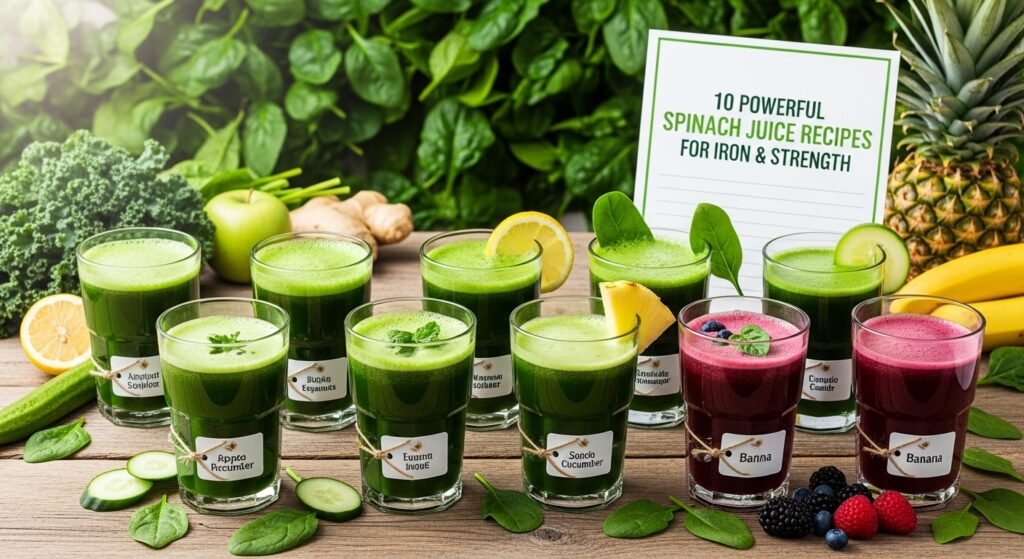
Best 10 Spinach Juices for Iron and Strength
1. The Classic Iron Booster (Spinach + Apple)
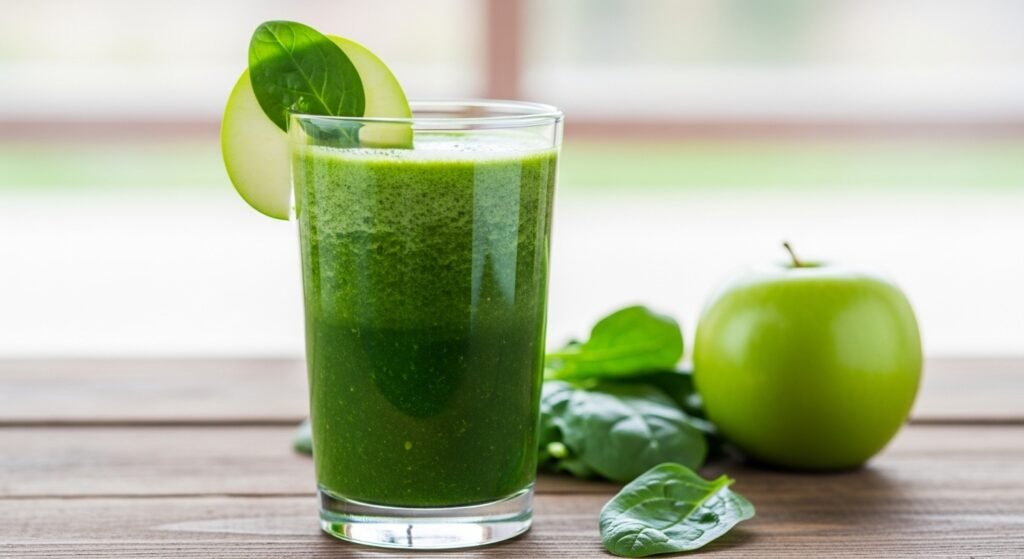
This is the entry-level spinach juice recipe that everyone should master. The malic acid in apples helps with digestion, while the natural sugars provide an immediate energy lift.
- Ingredients: 3 cups fresh spinach, 2 large green apples, 1/2 lemon.
- Preparation: Run the spinach through the juicer first, followed by the apples to “flush” the green juice out. Finish with the lemon.
- Why it helps: The Vitamin C in the lemon and apple significantly increases the absorption of the iron in the spinach.
- Flavor Profile: Sweet, crisp, and refreshing with a slight tartness.
- Best for: Beginners and kids who are new to green juices.
2. The Circulation King (Spinach + Beet)
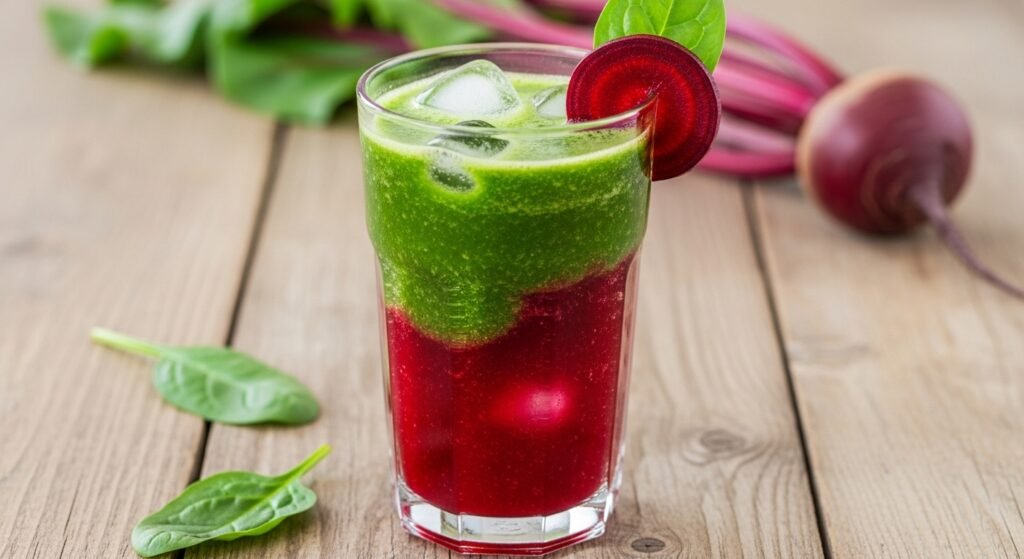
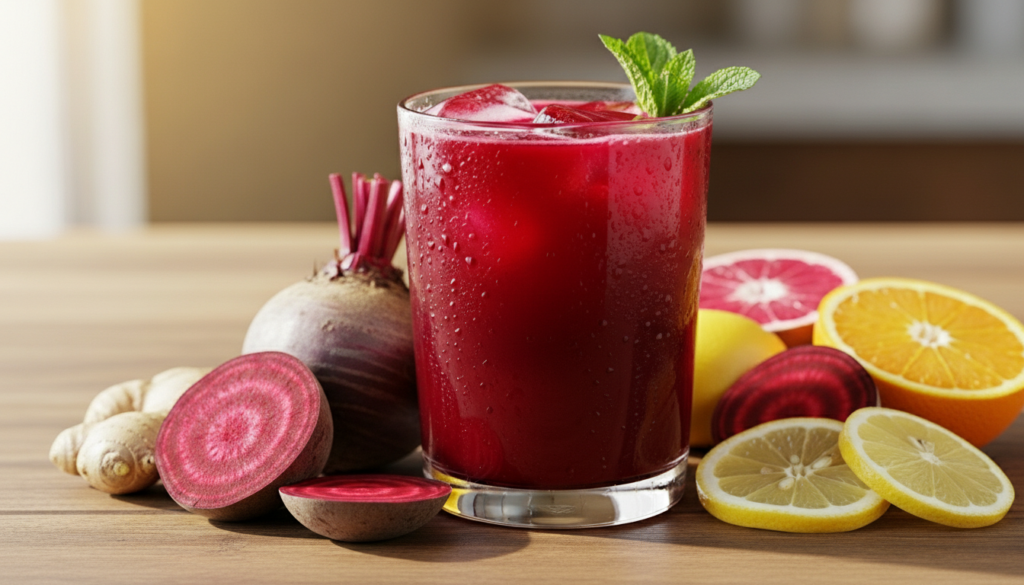
Beets are famous for their ability to boost nitric oxide, and when paired with spinach juice, they create a potent blood-building tonic.
- Ingredients: 2 cups spinach, 1 medium beetroot, 2 carrots, 1-inch ginger.
- Preparation: Peel the beet if the skin is bitter, then juice all ingredients together.
- Why it helps: This combination is an iron powerhouse. The betalains in beets support liver detoxification while the spinach builds the blood.
- Flavor Profile: Earthy, rich, and slightly spicy from the ginger.
- Best for: Athletes looking for a pre-workout stamina boost.
3. The Vitamin C Synergy (Spinach + Orange)
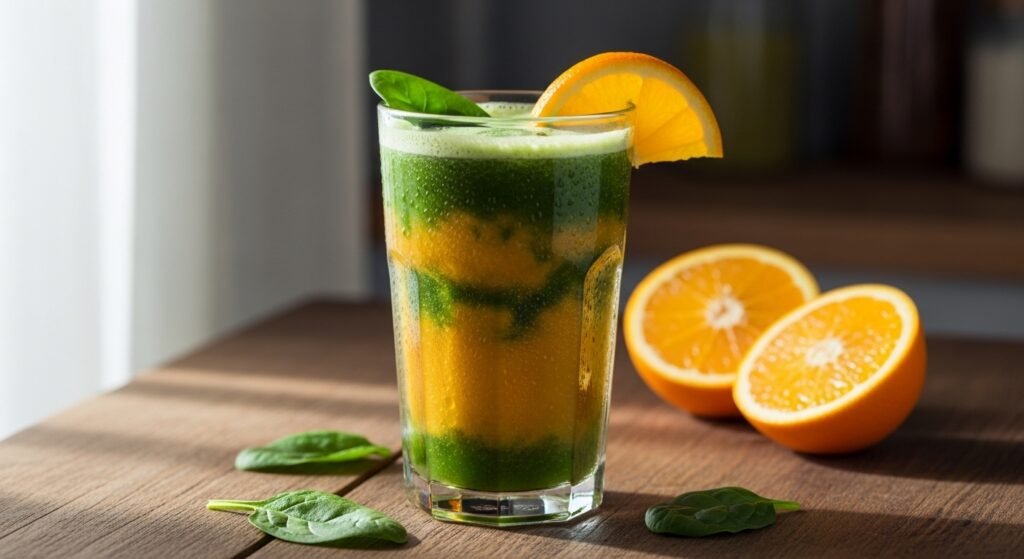
If you are focused specifically on the benefits of drinking spinach juice for iron, this is your go-to. Orange is the ultimate iron-absorption catalyst.
- Ingredients: 3 cups spinach, 2 peeled oranges, 1/2 cup parsley.
- Preparation: Juice the oranges and spinach alternately to ensure a good mix.
- Why it helps: The high Vitamin C content in oranges is the “key” that unlocks the non-heme iron in the spinach.
- Flavor Profile: Bright, citrusy, and very “clean” tasting.
- Best for: Those with low iron levels or mild fatigue.
4. The Tropical Recovery (Spinach + Pineapple)
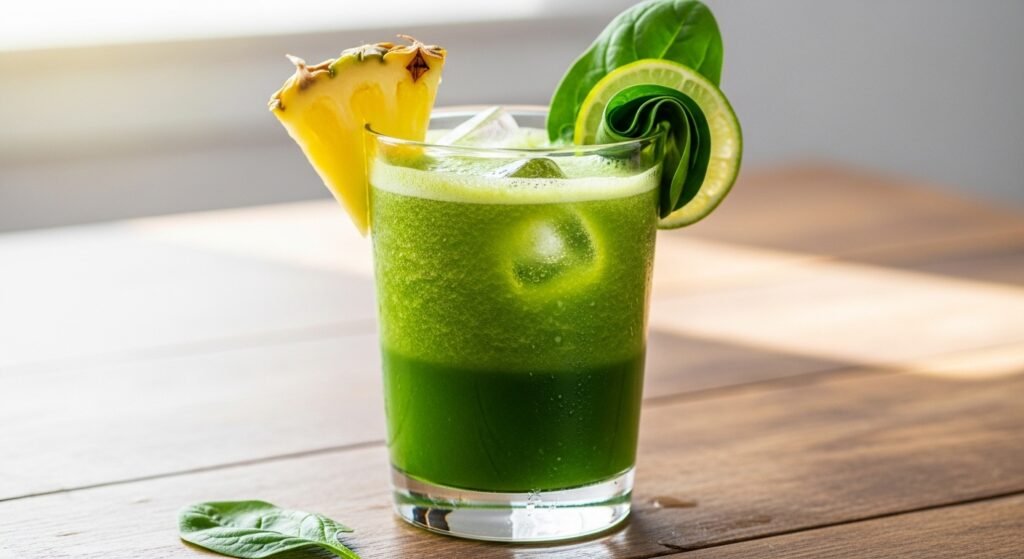
Pineapple contains bromelain, an enzyme that helps reduce inflammation. This makes it a perfect partner for spinach after a heavy lifting session.
- Ingredients: 3 cups spinach, 1 cup fresh pineapple chunks, 1 cucumber.
- Preparation: Juice the pineapple and spinach together, using the cucumber to add volume and hydration.
- Why it helps: It combines iron for blood health with anti-inflammatory enzymes for muscle recovery.
- Flavor Profile: Tropical, sweet, and incredibly hydrating.
- Best for: Post-workout recovery and summer mornings.
5. The Root Rejuvenator (Spinach + Carrot)
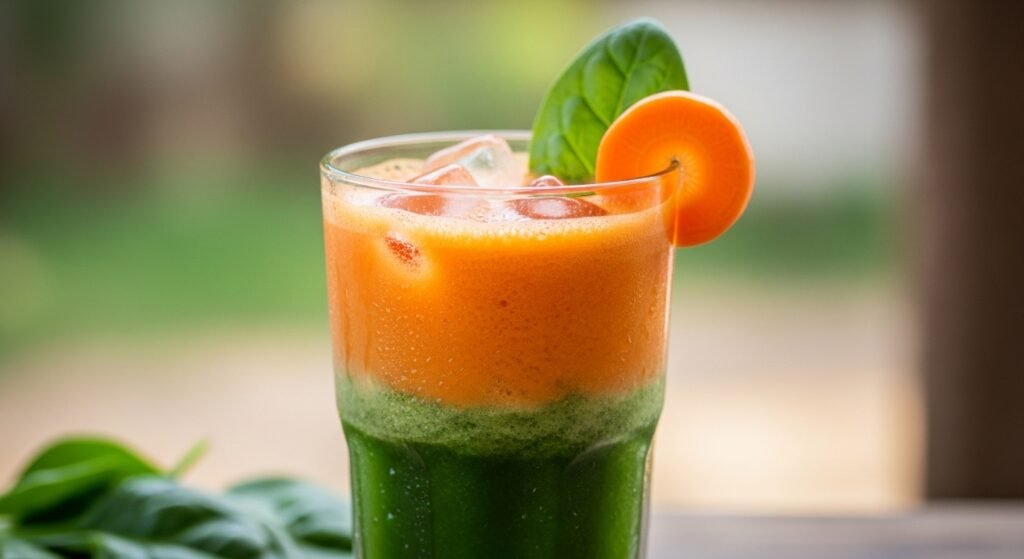
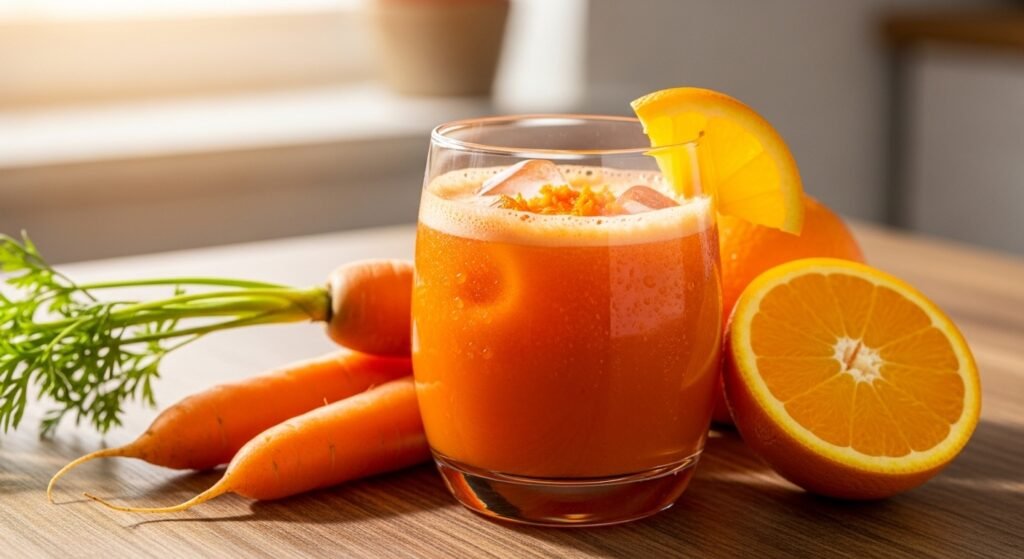
Carrots are rich in beta-carotene, which the body converts to Vitamin A. This is essential for maintaining the health of the linings of your blood vessels.
- Ingredients: 2 cups spinach, 4 large carrots, 1/2 lemon.
- Preparation: Juice the carrots and spinach. The carrots provide a lot of juice, making this a very cost-effective recipe.
- Why it helps: This spinach juice drink supports both vision and blood health, providing a wide spectrum of antioxidants.
- Flavor Profile: Sweet, earthy, and smooth.
- Best for: A mid-afternoon “pick-me-up” instead of coffee.
6. The Ultimate Detox (Spinach + Lemon + Ginger)
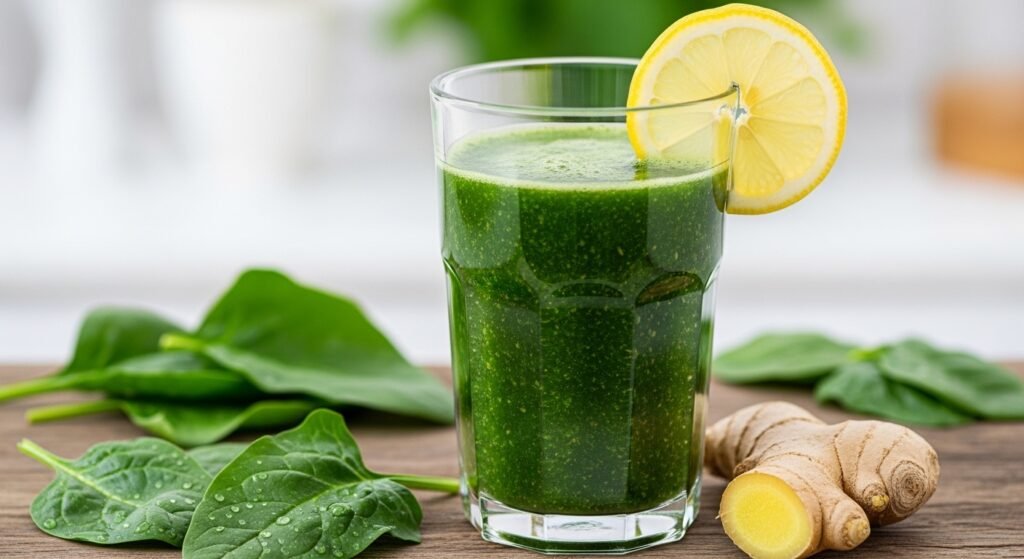
Sometimes you need to clear the slate. This recipe is designed to stimulate the digestive system while providing a massive hit of chlorophyll.
- Ingredients: 4 cups spinach, 1 whole lemon (peeled), 2-inch ginger root, 1 apple for sweetness.
- Preparation: Juice the ginger and lemon first to get the concentrated oils, then follow with the greens.
- Why it helps: Chlorophyll is structurally similar to hemoglobin, making spinach juice an excellent “blood purifier.”
- Flavor Profile: Sharp, zesty, and warming.
- Best for: Morning rituals or after a period of overindulgence.
7. The Hydration Hero (Spinach + Celery)
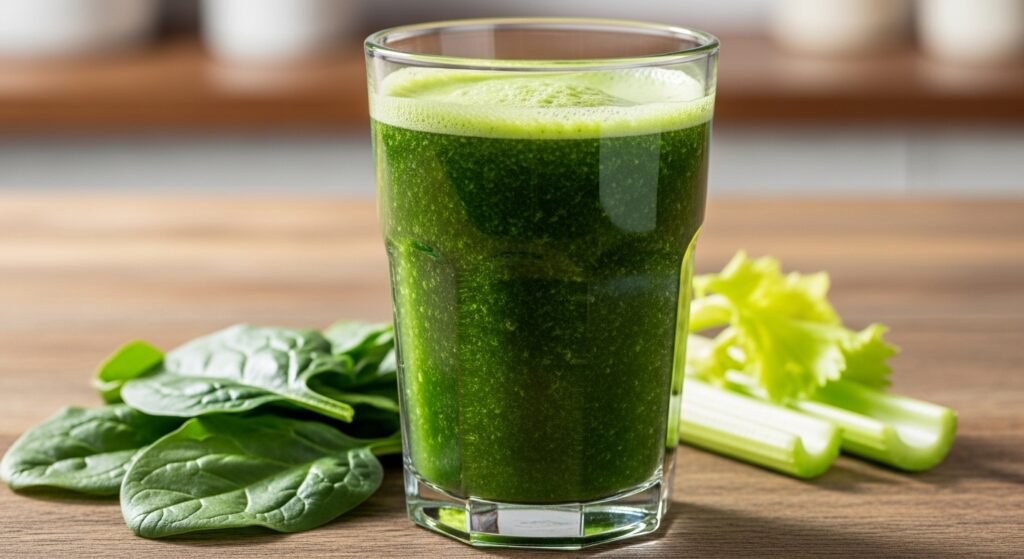
Celery juice has been a trend for years, but adding spinach takes it to a whole new level of nutritional density.
- Ingredients: 2 cups spinach, 4 stalks celery, 1 cucumber, 1 lime.
- Preparation: Juice all ingredients together. This yields a high volume of juice due to the water content of celery and cucumber.
- Why it helps: It provides essential electrolytes and iron without any fruit sugars, making it keto-friendly.
- Flavor Profile: Salty, fresh, and very light.
- Best for: People monitoring their sugar intake or those needing deep hydration.
8. The Anti-Inflammatory Blend (Spinach + Cucumber)
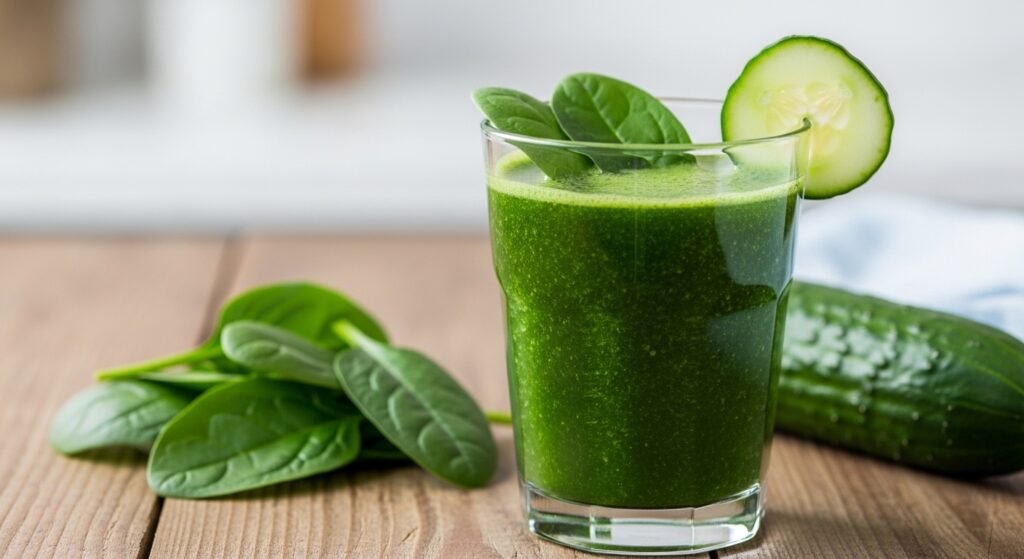
This is the most cooling spinach juice drink on the list. It is perfect for reducing systemic inflammation and calming the body.
- Ingredients: 3 cups spinach, 1 large cucumber, a handful of mint leaves, 1 green apple.
- Preparation: Juice the mint along with the spinach to ensure the oils are extracted.
- Why it helps: Cucumber is high in silica, which supports connective tissue strength alongside the iron from the spinach.
- Flavor Profile: Cooling, minty, and refreshing.
- Best for: Hot days or after a stressful workday.
9. The Blood Builder (Spinach + Pomegranate)
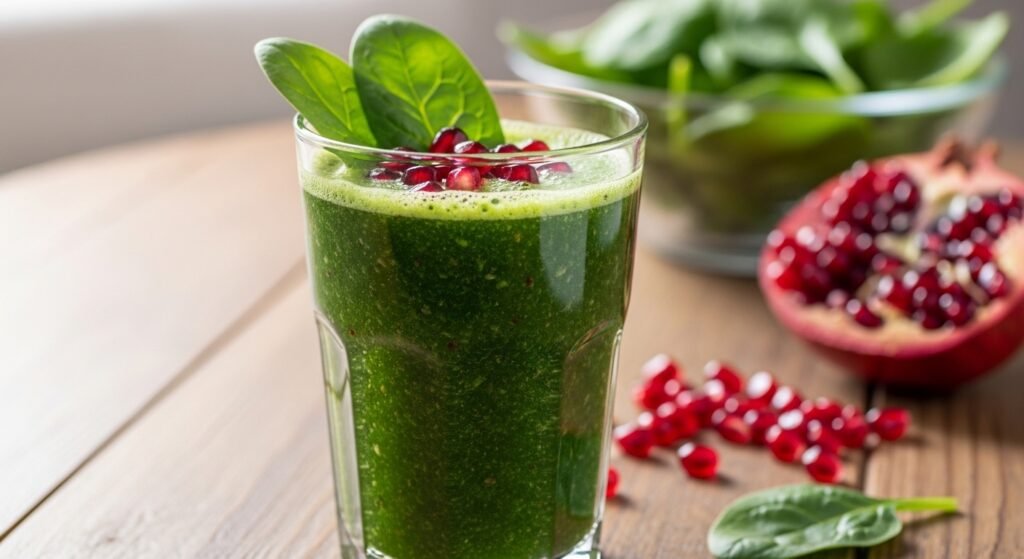
Pomegranate is one of the most heart-healthy fruits on the planet. Its deep red color signals its affinity for the blood.
- Ingredients: 2 cups spinach, 1 cup pomegranate arils (or 1/2 cup pure juice), 1 apple.
- Preparation: If using a juicer, ensure it can handle pomegranate seeds. Otherwise, stir pure pomegranate juice into your fresh spinach juice.
- Why it helps: Pomegranates are rich in polyphenols that protect the cardiovascular system, enhancing the iron-delivery power of spinach juice.
- Flavor Profile: Tart, complex, and slightly astringent.
- Best for: Heart health and advanced circulation support.
10. The Green Powerhouse (Spinach + Pear + Kale)
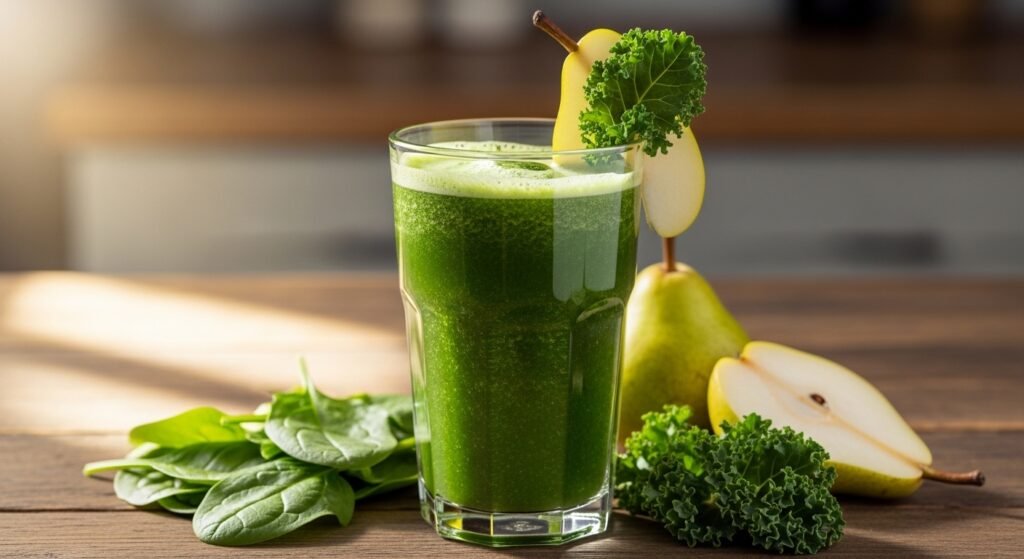
For those who want the maximum possible “green” impact, this recipe combines the two most popular leafy greens with the soft sweetness of pear.
- Ingredients: 2 cups spinach, 1 cup kale, 2 ripe pears.
- Preparation: Alternate the leafy greens with the pear to help the juicer process the fiber-rich kale.
- Why it helps: It offers a double dose of plant-based iron and a huge variety of phytonutrients.
- Flavor Profile: Deeply “green” but balanced by the grainy sweetness of the pear.
- Best for: Experienced juicers who want a nutrient-dense meal replacement.
Spinach Juice vs Smoothies for Iron
A common debate in the health community is whether one should juice or blend their greens. When considering a spinach juice recipe versus a spinach smoothie, the choice depends on your specific goals. Juicing removes the fiber, which some people view as a downside. However, for iron absorption, juicing has a distinct advantage.
Without the fiber, the nutrients in spinach juice are absorbed almost instantly through the stomach lining. This provides a rapid “hit” of minerals to the bloodstream.
If you are struggling with iron deficiency or need an immediate energy boost, juice is the way to go. It is also less filling, meaning you can easily consume the nutrients of an entire pound of spinach in one glass.
Smoothies, on the other hand, keep the fiber intact. This is better for blood sugar regulation and long-term fullness. If you are using spinach as a meal replacement, a smoothie is superior. But if your goal is targeted “blood building” and strength enhancement, the concentrated nature of the juice is hard to beat. Many people in 2026 choose to do both: a green juice in the morning for a “system restart” and a protein smoothie in the afternoon.
How to Maximize Iron Absorption
Drinking spinach juice is only half the battle; the other half is ensuring your body can actually use the iron you’re giving it. Non-heme iron is sensitive to its environment. To get the most out of your juice, you must pair it with Vitamin C. As we’ve seen in our recipes, adding lemon, lime, orange, or even strawberries can increase absorption by up to 300%.
Timing is also crucial. You should avoid drinking tea or coffee within an hour of your spinach juice. The tannins and polyphenols in tea and coffee can bind to iron, preventing it from being absorbed. Similarly, high-calcium foods should be consumed at a different time. Calcium and iron compete for the same receptors in the gut, and calcium usually wins.
Another “pro tip” for 2026 is to drink your juice on an empty stomach. This ensures that there are no other competing nutrients or digestive distractions. Wait about 20 to 30 minutes before eating a full meal. This gives the liquid gold enough time to pass into the small intestine where the magic happens.
Who Should Be Careful?
While the benefits of drinking spinach juice are vast, it is not for everyone in unlimited quantities. The primary concern with spinach is its oxalate content. Oxalates are naturally occurring substances that can crystallize in the kidneys of susceptible individuals, leading to kidney stones. If you have a history of calcium-oxalate stones, you should consult with a nutritionist before starting a daily juicing habit.
Moderation is key for everyone. Rotating your greens is a fundamental principle of juice therapy. Don’t just use spinach every single day for months. Switch to kale, romaine, parsley, or bok choy to give your body a break from specific phytochemicals. This variety ensures you get a broader range of nutrients while minimizing the risk of over-consuming oxalates.
Lastly, if you are on blood-thinning medication like Warfarin, be mindful of the Vitamin K in spinach juice. Vitamin K helps the blood clot, which can interfere with the effectiveness of these medications. Again, a quick conversation with a healthcare provider can help you find a safe balance that allows you to enjoy the benefits without the risks.
Common Mistakes When Making Spinach Juice
The most common mistake is using too much spinach in a single serving. It might seem like more is better, but a concentrated dose of raw spinach can be hard on the digestive system for some.
Start with a handful and work your way up. Another mistake is poor pairing. Juicing spinach with nothing but high-sugar fruits like grapes or watermelon can lead to a blood sugar spike, followed by a crash. Always include a “buffer” like cucumber or celery.
Not washing your spinach properly is a significant safety risk. Leafy greens are often grown close to the ground and can harbor bacteria or pesticide residue. Even if the bag says “triple washed,” it’s a good idea to give it one more rinse in cold water with a splash of apple cider vinegar. This ensures your spinach juice is as clean as it is nutritious.
Finally, don’t let your juice sit around. The moment the juice is extracted, it begins to oxidize. The enzymes and vitamins start to break down when exposed to light and air. For the best results, drink your spinach juice drink within 15 minutes of making it. If you must store it, use an airtight glass jar and fill it to the very brim to minimize the air gap.
FAQ
Can you drink spinach juice every day?
Yes, most people can enjoy spinach juice daily, provided they are not prone to kidney stones. However, it is best to rotate your greens weekly to ensure a balanced intake of different phytonutrients and avoid a buildup of oxalates.
Is spinach juice good for iron deficiency?
While not a medical cure, spinach juice is an excellent supplemental source of plant-based iron. When paired with Vitamin C, it can significantly contribute to your daily iron needs and help combat the fatigue associated with low iron levels.
Does juicing remove the fiber from spinach?
Juicing removes the insoluble fiber (the “bulk”), but it leaves behind the soluble fiber and all the liquid-bound nutrients. This makes the nutrients easier for your body to absorb quickly, which is ideal for a strength and energy boost.
How much spinach juice should I drink?
A standard serving is about 8 to 12 ounces. You don’t need to drink gallons of it; the concentration of nutrients in a single glass is usually enough to provide the desired benefits of drinking spinach juice.
Can I juice frozen spinach?
It is not recommended. Frozen spinach becomes mushy when thawed and doesn’t process well through a juicer. For the best flavor and nutritional profile, always use fresh, crisp leaves.
Can you juice spinach if you have a sensitive stomach?
If you have a sensitive stomach, try diluting your spinach juice with 50% water or adding more cucumber. This reduces the concentration and makes it gentler on your digestive lining.
What is the best time to drink spinach juice?
The best time is in the morning on an empty stomach. This allows for maximum absorption of the iron and minerals before other foods interfere with the process.
Does spinach juice taste bad?
Not at all! Spinach is one of the mildest greens. When mixed with an apple or an orange, you can barely taste the “greenness” at all. It’s a very pleasant way to get your veggies in.
Choosing Your Juicer
To get the most out of your spinach juice, the type of machine you use matters. Leafy greens are notoriously difficult for cheap centrifugal juicers to handle; the blades often just spin the leaves around without extracting much liquid.
If you are serious about your health journey, look for a “masticating” or “cold-press” juicer. These machines use a slow-turning screw to crush the spinach, squeezing out every drop of chlorophyll-rich juice. This process generates less heat, which preserves the delicate enzymes and vitamins. Brands that offer “slow juicers” are typically the best for greens.
When shopping, look for a juicer with a wide feed chute to save on prep time, and ensure it is easy to clean. If a juicer is hard to clean, you won’t use it! A high-quality machine is an investment in your long-term strength and vitality.
Conclusion
The journey to better health and increased strength doesn’t have to be complicated. By incorporating a simple spinach juice habit into your daily routine, you are providing your body with the fundamental building blocks it needs for peak performance.
From the iron that fuels your blood to the nitrates that power your muscles, spinach is truly a gift from nature.
Remember that consistency is more important than perfection. You don’t have to drink the most complex green juice every day. Even a simple blend of spinach and lemon can make a massive difference in your energy levels over time.
As we move further into 2026, the focus on “food as medicine” will only continue to grow, and you are now equipped with the knowledge to lead that charge.
Explore the different recipes, find the flavor profiles that you enjoy, and listen to your body. Whether you are looking to break a personal record in the gym or simply want to feel more awake during your morning meetings, the power of greens is undeniable. Cheers to your health, your strength, and your vibrant future!
Share Your Juice Experience
There are no reviews yet. Be the first one to write one.